Habitat Protections for Ringed and Bearded Seals Reinstated
Ringed and bearded seals are Arctic species in Alaska, living on the sea ice and in the bays and estuaries of the Bering, Chukchi, and Beaufort Seas. The two species are essential to both the Arctic ecosystem as a whole and local communities, where the seals serve as a vital traditional resource for Alaska Natives, providing food, fuel, and materials for clothing. Ice dependent, they follow the edge of sea ice throughout the year and are critical “indicator species” of climate change.
The bearded seal is among the largest northern seals, recognized by its long whiskers and robust body. Bearded seals typically give birth on drifting pack ice and are known for their elaborate underwater vocalizations during the breeding season.
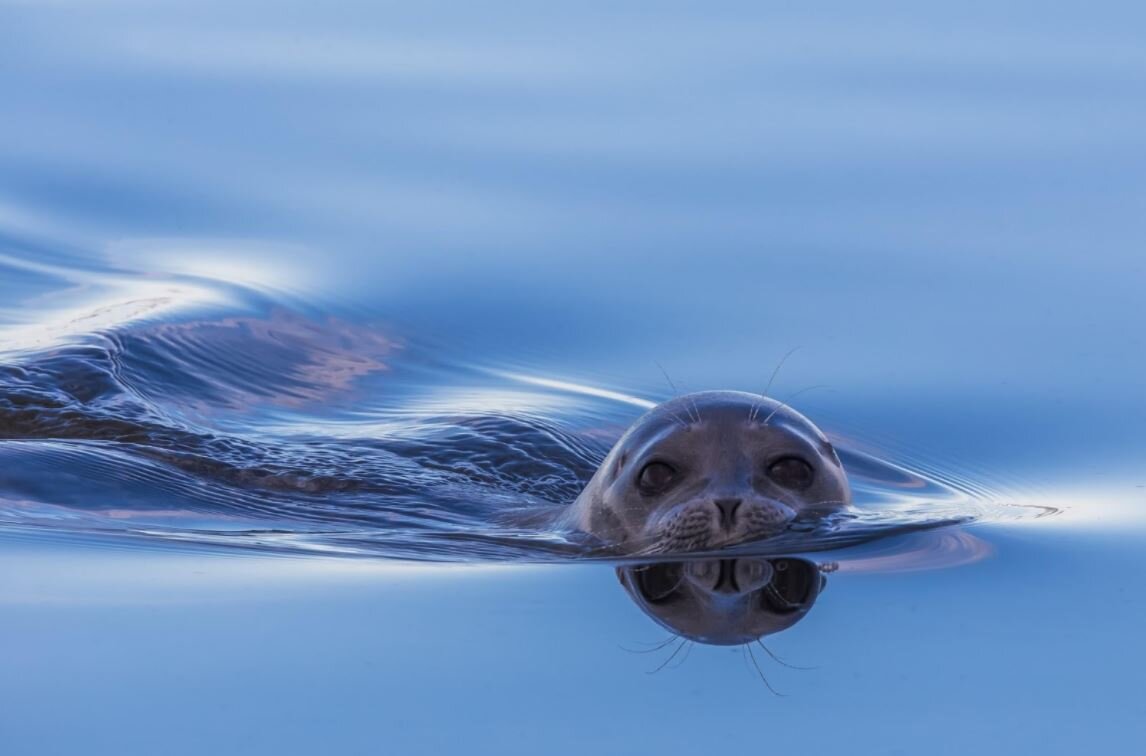
The smaller ringed seal is one of the few Arctic mammals that maintains breathing holes in thick ice year-round so they can access the ice. They also excavate snow lairs above these holes to shelter their pups from predators and extreme cold.
With climate change and the ensuing loss of sea ice, both ringed and bearded seals have faced habitat loss over the last several decades. In 2012, the Arctic subspecies of ringed seals and the Bergina population of bearded seals were listed as threatened under the Endangered Species Act (ESA).
The ESA requires that NOAA Fisheries designate critical habitat for listed species; however, none was designated for ringed and bearded seals. In 2022, the Center for Biological Diversity, as well as AWA, worked to help designate 160 million acres as critical habitat for ringed and bearded seals. Critical habitat identifies geographic areas that contain features essential to the conservation of a listed species; namely, for ringed and bearded seals, sea ice suitable for pupping, nursing, basking, and molting, as well as primary prey resources.
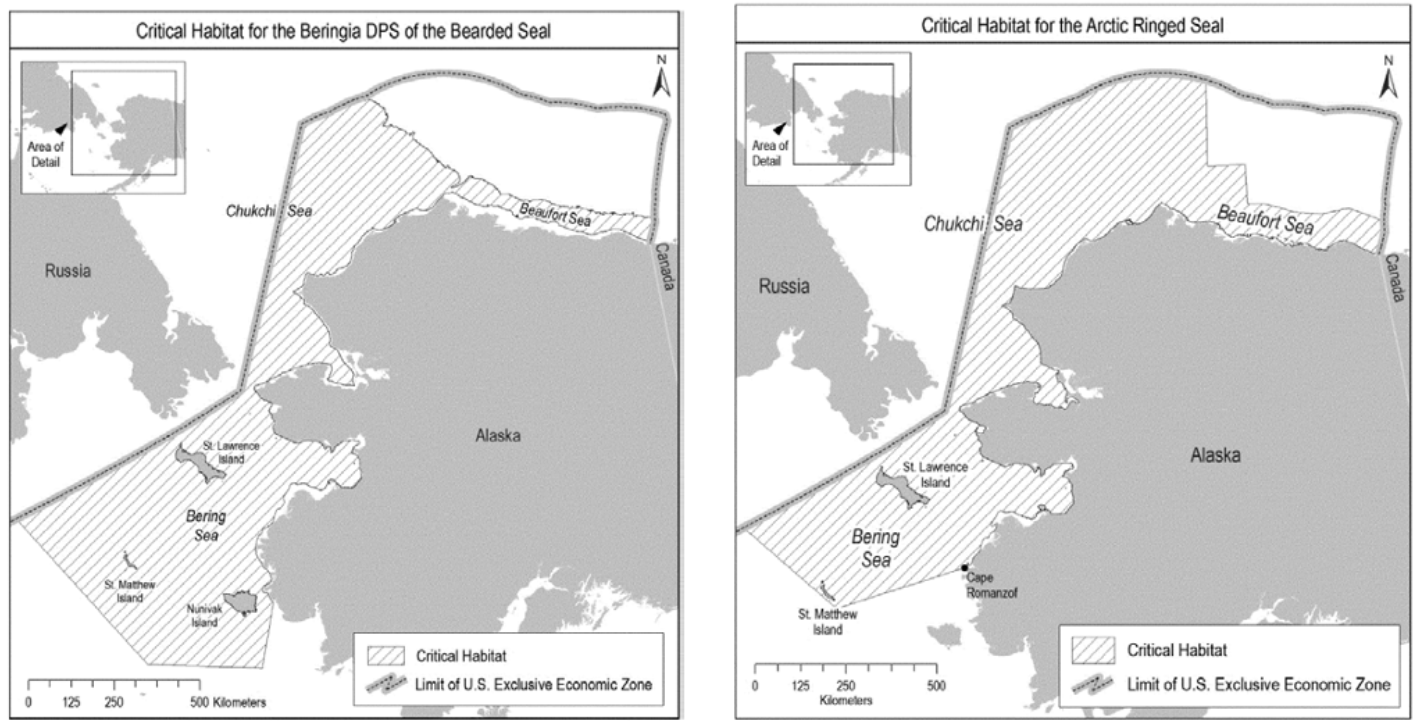
Maps of the critical habitat for the ringed and bearded seal. Source: 9th Circuit Court of Appeals opinion, State of Alaska v. National Marine Fisheries Service, March 25, 2026.
In 2024, US District Court Judge Sharon Gleason revoked the ESA critical habitat designations for ringed and bearded seals, after the state of Alaska argued that the 160 million-acre designation was “overly broad” and negatively impacted oil and gas development. The Center for Biological Diversity pursued an appeal of the decision, and on March 25, a federal appeals court upheld the designation of critical habitat.
