
New Hunting and Trapping Regulations in Southeast, Alaska
Learn what did (and did not) happen at the Southeast Board of Game Meeting.
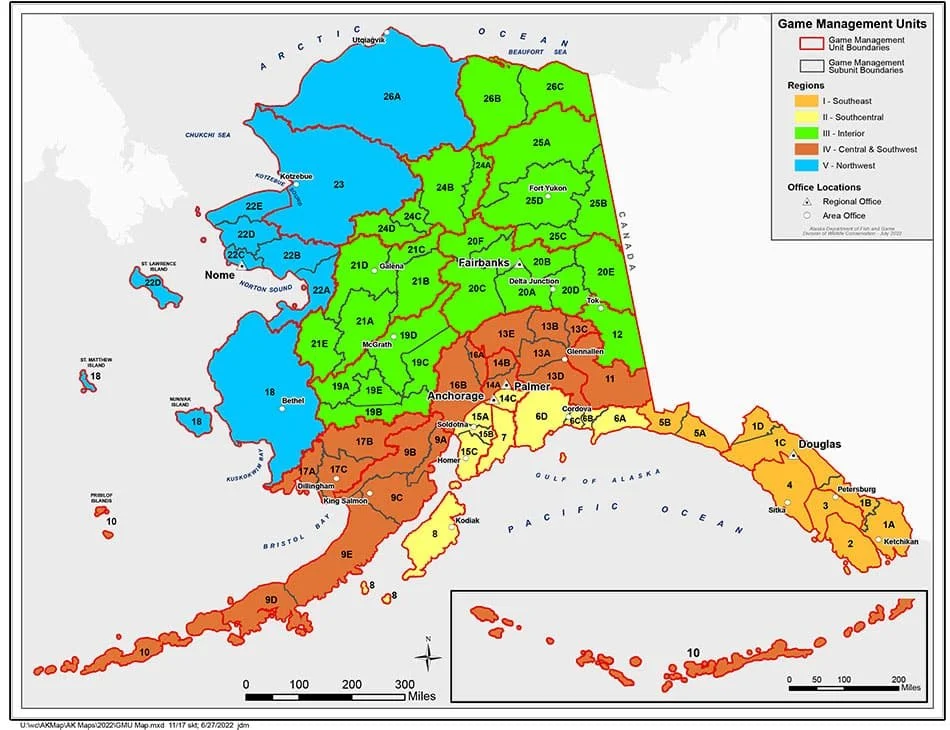
The Southeast game units are highlighted in orange.
The Alaska Board of Game (BOG) is responsible for making decisions regarding wildlife management in Alaska, including population and harvest objectives and hunting regulations, which are then acted upon by the Alaska Department of Fish and Game (ADFG). Proposals are submitted by the public, ADFG, and Advisory Committees, and then deliberated upon by the Board, by region on a rotating basis with a three-year cycle (watch our whiteboard video to learn more!). This year, the Board accepted Southeast proposals. A public comment period was held prior to the Board deliberation meeting.
Alaska Wildlife Alliance attended the Southeast Board of Game Meeting, held in Wrangell in January, as a voice for Alaska’s wildlife, giving testimony, mobilizing public comment on proposals, and watching deliberations.
What is the Board of Game?
The Board of Game consists of seven members, each serving three years. There are no term limits. Members are appointed by the Governor and confirmed by the legislature.
The Board makes decisions regarding game management in Alaska, including population and harvest objectives and hunting regulations. These decisions include when to open and close seasons, areas for hunting and trapping, bag limits, methods and means, setting “policy and direction” for state wildlife management, allocative decisions, and deciding population objectives across the state.
The Alaska Department of Fish and Game (ADFG) is then responsible for enacting management based on those decisions.
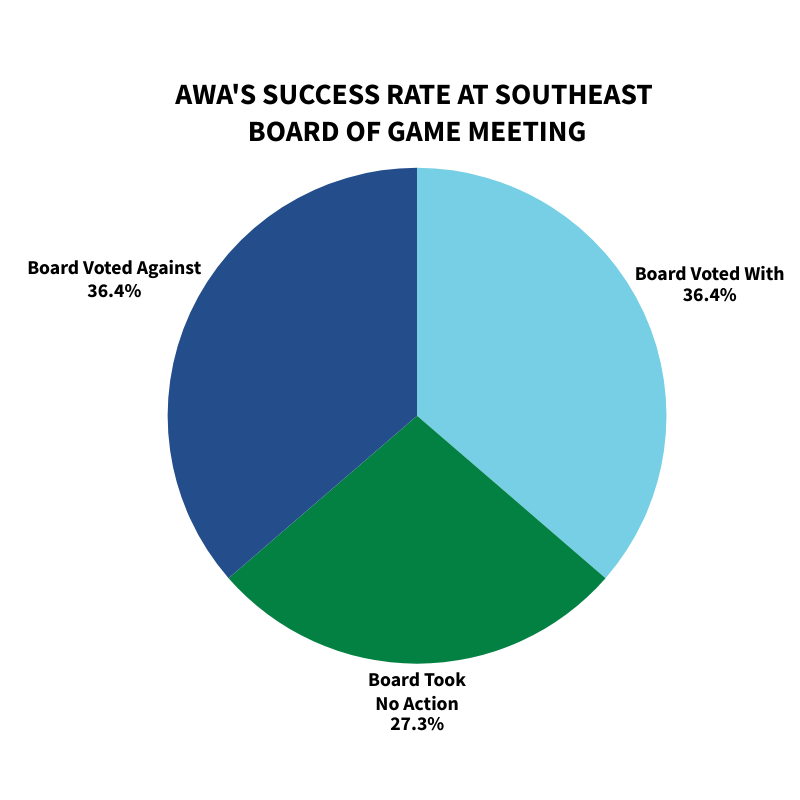
Overall, AWA submitted comments on 44 proposals. Of those, the Board ‘took no action’ on 12 proposals we commented on.
The Board of Game voted with us on 16 of the proposals they took action on, for a 50% success rate, and voted against us on 16 proposals, for a 50% failure rate.
Keep reading for a breakdown on the key proposals we were watching!
Let’s start with the good news:
Night vision will no longer be allowed for the killing furbearers in Southeast Alaska during state and federal deer seasons. The use of night vision and forward-looking infrared devices (aka FLIR) was passed Statewide in 2025, despite widespread concern in Southeast of the potential for its abuse for poaching deer.
Many proposals from Southeast Advisory Committees and individuals were submitted to the Board of Game, asking them to ban the use of night-vision and FLIR in Southeast. AWA supported those proposals. Though the Board did not approve most of these proposals, they did pass a regulation to make night-vision and FLIR illegal during the state and federal deer hunting seasons. AWA considers this a victory in the region, even though a full ban would have been preferred.

Injured goats count toward a hunter’s limit across the region. The Board agreed with AWA’s position to pass proposal 4, which changed goat hunting regulations so that a goat injured by a bullet or arrow counts against a hunter’s bag limit. AWA supports injured animals counting against bag limits across all species.
No same-day airborne hunting on goats anywhere in Southeast. Board members agreed with AWA’s position to unanimously vote down proposal 3, which sought to allow people the ability to hunt a mountain goat on the same day that they fly in a float plane. The board agreed that the proposal, if approved, would undermine a “fair chase” for hunters who hike into mountain goat habitat.
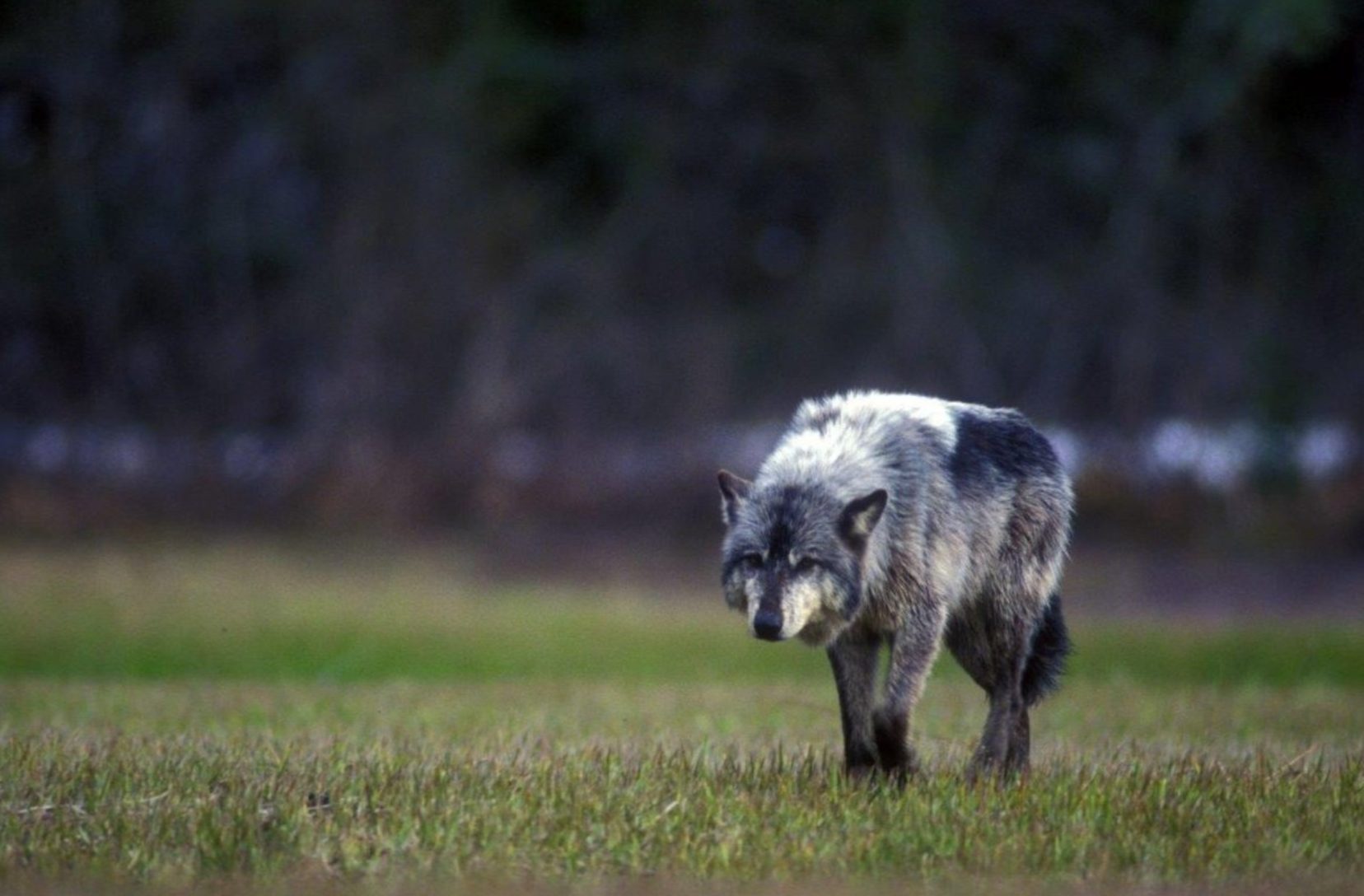
The State will now manage for a higher number of genetically distinct Alexander Archipelago wolves. AWA has been advocating, through the courts and through Board of Game proposals, to ensure that Alexander Archipelago wolves are not over-trapped. Wolves in Southeast Alaska have been generally isolated from other North American wolf populations for thousands of years, with slowly declining genetic diversity. Within Southeast Alaska, the Prince of Wales population is the most reproductively isolated, with the lowest genetic diversity and the highest degree of inbreeding. This wolf population has also been petitioned for the Endangered Species List three times.
The State has generally always favored liberal trapping seasons on these wolves and, concerned that over-trapping was leading to inbreeding, AWA submitted a proposal to the Board of Game in 2023. We asked the Board to increase the number of wolves on the island from 150-200 wolves to 250-350 wolves, and that the Department close the trapping season if the island population got below 200 wolves. Our proposal failed 0-7.
This year, AWA showed broad support for Proposal 48, which sought to raise the wolf population to 200-300 wolves. Despite the Director of Wildlife Conservation trying to downplay the amount of inbreeding in these island wolves, a 2025 study from ADFG found that these wolves“exhibit an extent of inbreeding similar to that observed in Isle Royale National Park wolves, a population that has exhibited severe inbreeding depression."
The Isle Royale wolf population once consisted of 50 wolves; intense inbreeding caused the population to crash, and in 2019, there were only two wolves left, a father and daughter pair that were also half-siblings.
AWA will continue to watchdog Alexander Archipelago wolf management to ensure that this inbred population recovers healthy levels of genetic diversity, has intact old-growth habitat, and is not over-trapped.

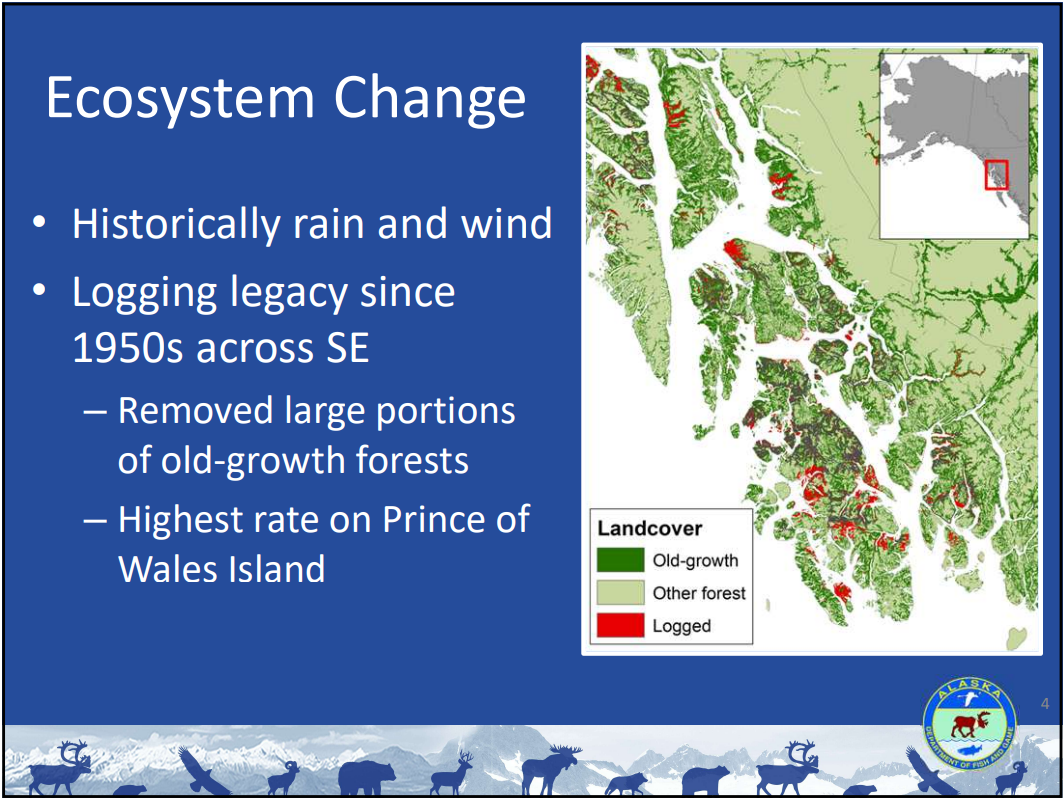
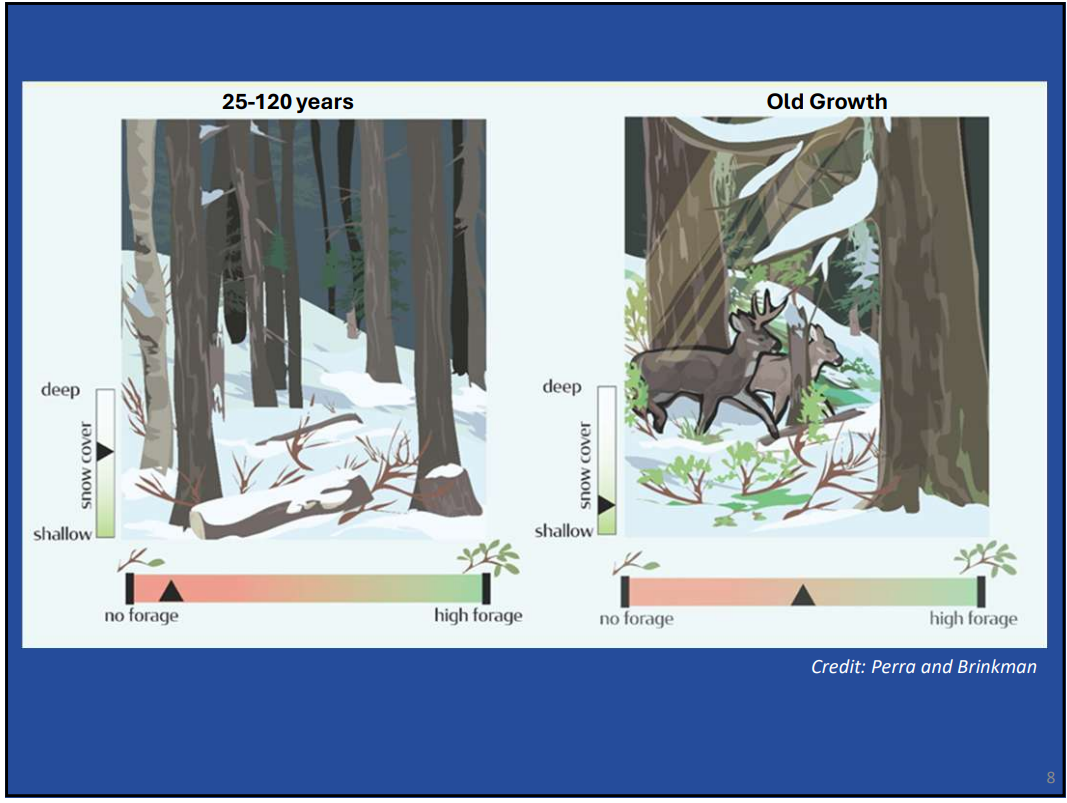
Wolves will not be added to the Intensive Management plan in Prince of Wales. The deer population on Prince of Wales has been declining; however, during deliberations, it was acknowledged that neither black bears or wolves are the main problem, but instead, loss of habitat from old-growth logging is driving the deer decline.
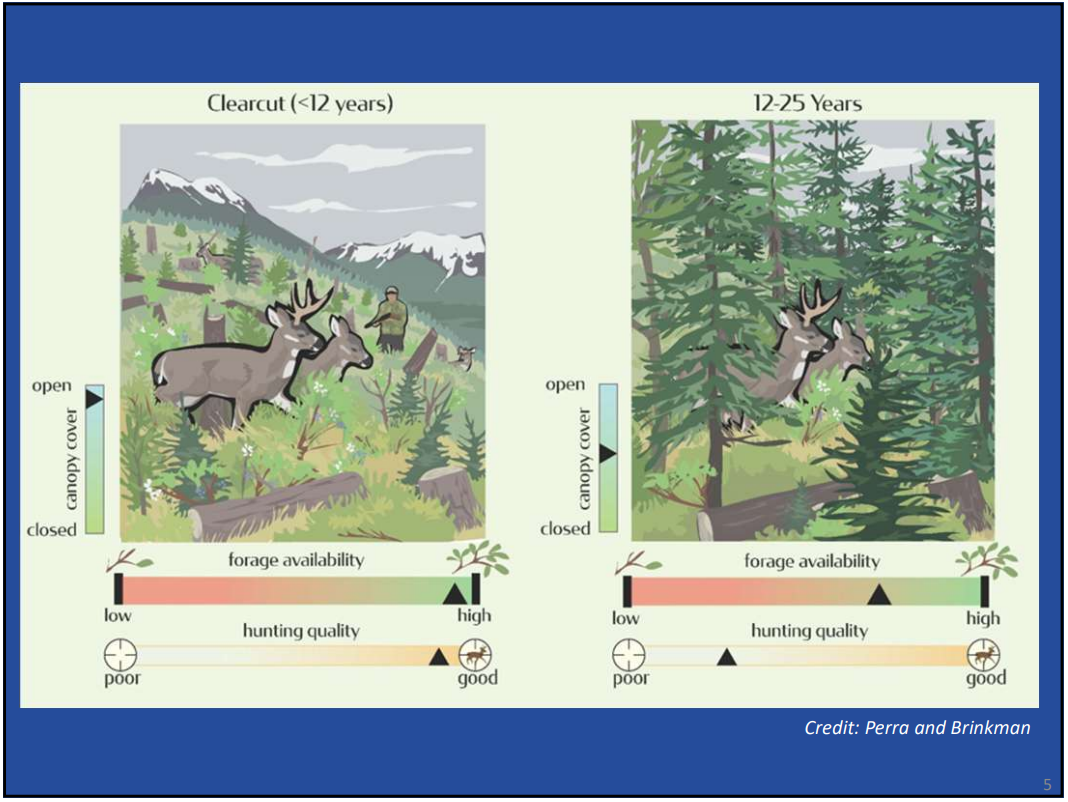
While young clearcuts can initially have abundant forage, as second-growth trees mature, the forest enters a stem-exclusion stage (dense, even-aged canopy). This blocks sunlight, drastically reducing understory plants that deer rely on for food.
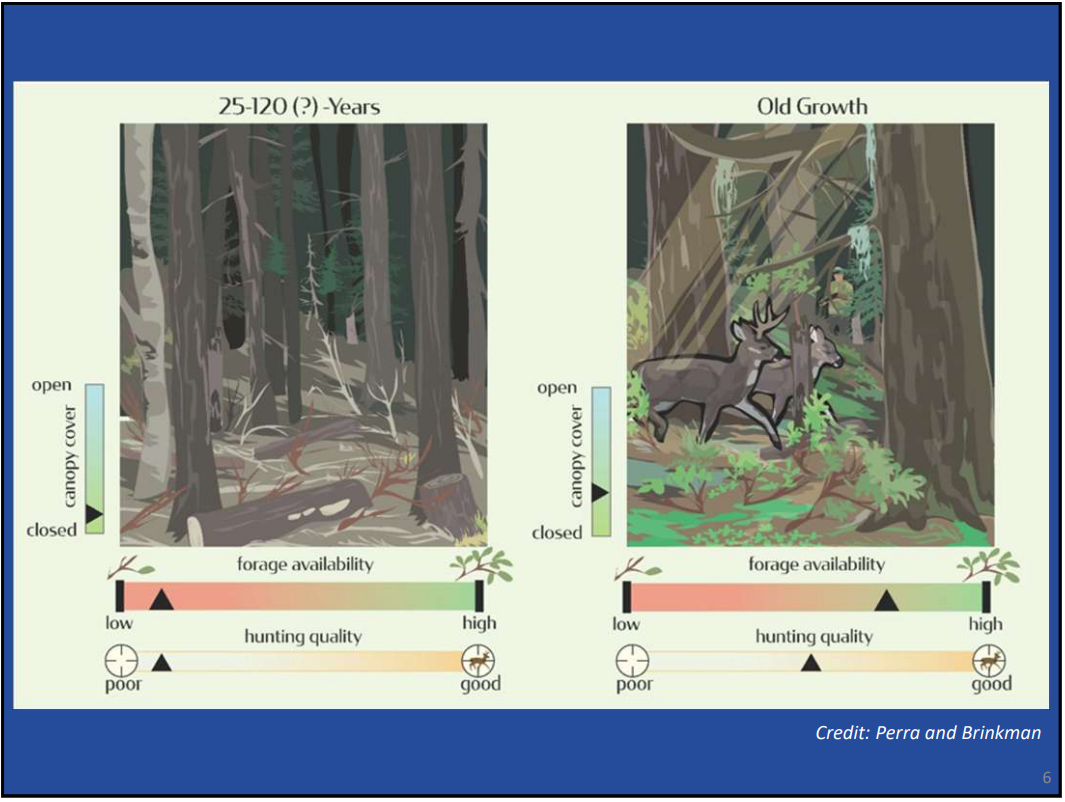
This low-quality habitat stage often lasts for decades to over a century, meaning logged areas contribute little to long-term deer nutrition and survival.
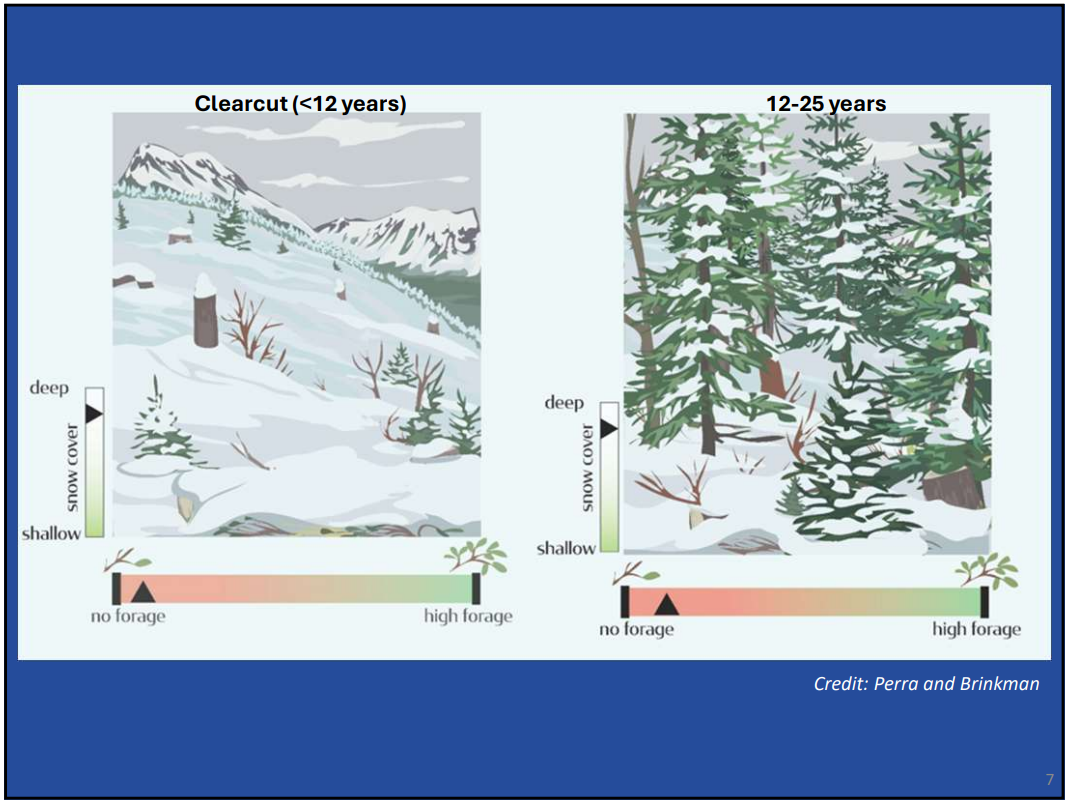
Old-growth forests also provide key refuge for deer in winter; their tall, multi-layered canopies reduce snow on the forest floor, so deer can reach food even in deep snow years. Logging often removes this protective canopy, burying food for deer during a critical season and increasing winter mortality. Check out the slides below from ADFG’s presentation to the Board on how logging affects deer and their foraging.
And now the bad news:
Region-wide open season on mountain lions. The Board voted unanimously to establish an open season for hunting cougar (aka mountain lion) in Southeast. This season is the first ever created for mountain lions in the state, but unlike other species, the department will not manage cougars to a minimum population objective.
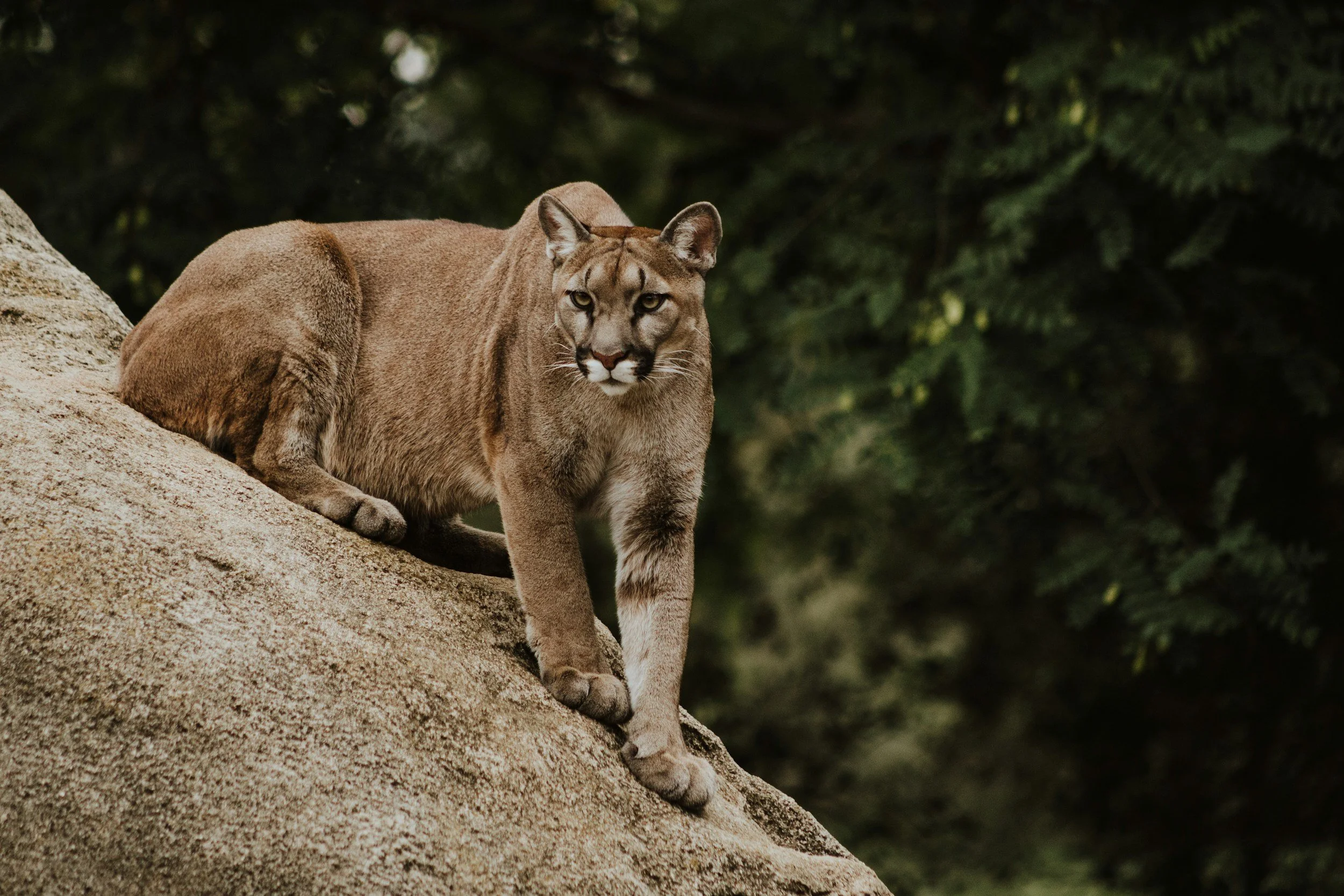
Cougars are thought to enter Southeast Alaska by following river valleys from Canada to the coast. There have been five documented mountain lion sightings in Alaska since 1989. In 2024, a young male cougar was killed on Wrangell Island, and in 2025 an adult male was captured in a wolf snare on Kuiu Island. When the Baord passed proposal 8, they established a new regulation that classifies cougars as both fur bearer and a big game animal, allowing them to be both hunted and trapped. The hunting season dates are set for August 1 - June 15; trapping season dates in Units 1,3,4, and 5 are November 15 - March 31 (no cougar trapping season on Prince of Wales). Hunters are allowed to kill one cougar per year, while trappers have no limit.
ID tags will not be required to be attached to traps and snares in this area. Proposal 54,which sought to require ID tags on all traps and snares in Unit 2 failed - despite support from Alaska Wildlife Troopers. Alaska Wildlife Troopers testified that every other anonymous form of animal harvest (ex: shrimp pots)requires ID except for traps and snares. The proposal failed by a narrow margin of 3 to 4. AWA supports trap identification requirements, as many other states have found that the practice increases compliance with trapping regulations and discourages setting traps in irresponsible locations. Alaska used to have trap ID requirements until the Board of Game removed that regulation in 2016, without any representation from Southeast. Alaska is one of only 6 states where traps are not required to have ID tags.

Resident brown bear hunt areas in Unit 1C now include the Chilkat Range, and hunters can now kill one brown bear every year (used to be one bear every 4 years per person).
The bag limit for brown bears in the Yakutat area was also increased to one bear every regulatory year from one bear every four regulatory years.
AWA opposed both of these proposals for the reasons below:
A liberalization this dramatic will likely result in harvest levels above what is sustainable. By ADFG’s own admission, brown bear kills along the Chilkat Range have been equal to or greater than the sustainable guideline harvest level for that population for 8 of the past 10 years.
Brown bear harvests have been low in the last 10 years in Units 5A and 5B, however ADFG attributes this to the local transporter not taking bear hunters out on hunts. A new air taxi in the area will likely increase hunter success.
ADFG commented thatincreased hunter participation and kill-rates from the most recent 5-year period do not indicate a growing brown bear population. In short, the Board dramatically increased the number of bears that can be killed on a population that is not growing.
The bag limit for brown bears in Unit 3 was increased from one bear every 4 regulatory years to one bear every regulatory year. AWA opposed this proposal as population estimates are not available for brown bears in Unit 3. Brown bears in the region already face increased pressure outside the hunting season; from 2015 to 2024, about half of the brown bears killed in Unit 3 were shot under the defense of life and property provision or were poached. Tripling the bag limit for this population, especially given the ratio of non-season bear kills, simply doesn’t make sense.
This proposal passed 4-3 despite conservation concerns from ADFG.
Thank you to all of our supporters and members who have helped us advocate for Alaska’s wildlife through the Board of Game process. Stay tuned for updates on which proposals passed and failed following the January meeting!
