Mulchatna Bear Gunning Resumes in Southwest Alaska
The State has started its fourth year of gunning bears from planes and helicopters.
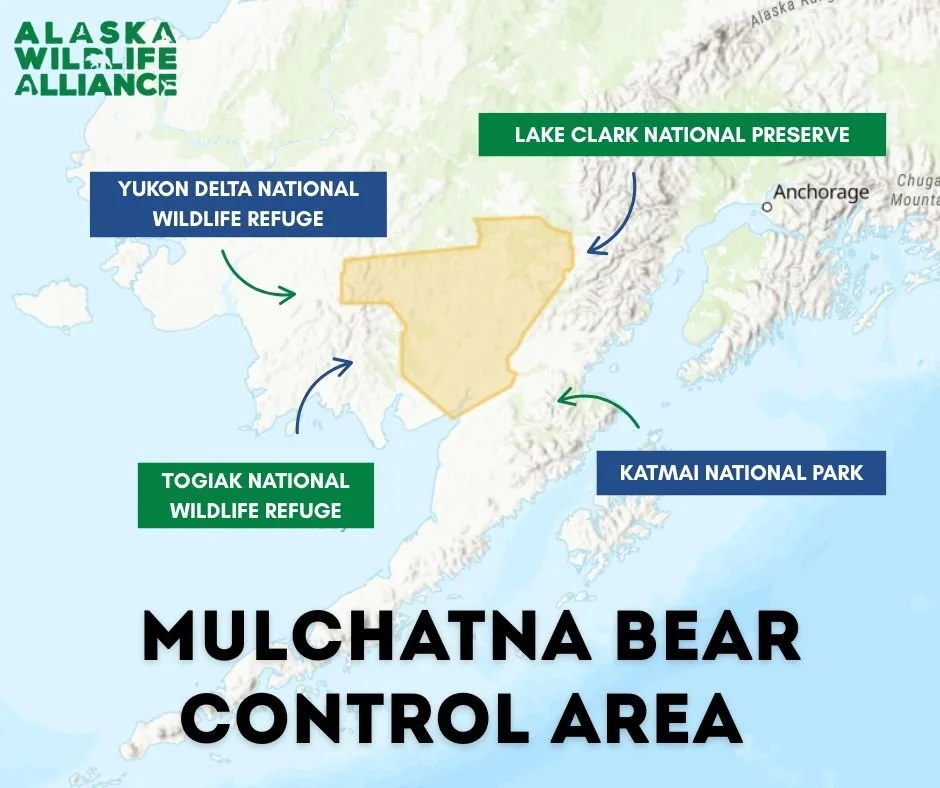
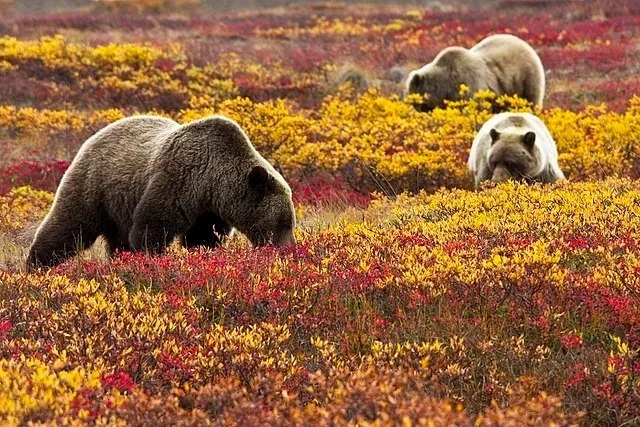
Since 2022, nearly 200 bears, at least 36 of which were cubs, have been gunned from helicopters in Southwest Alaska under the Mulchatna Bear Control Program. The program has drawn widespread condemnation from the public and biologists, and was ruled illegal by two Superior Court judges after AWA sued the state. Despite the rulings, the Board of Game has reinstated the program in an area the size of Kentucky, just 50 miles from the bears of Fat Bear Week in Katmai National Park.
We are in ongoing litigation against the State for reinstating the Mulchatna Bear Control Program without proper science. As of May 2026, State gunners are once again shooting bears of any age and sex in the “control area”. AWA and our partners are continuing the fight for Mulchatna’s bears, and we need your help. If you live in Alaska, you can contact your local representative to voice your concerns. The best way to support our efforts is to donate to our Wildlife Defense Fund. Thank you for helping us be a voice for wildlife!

History of the Mulchatna Bear Control Program
In 2022, the State of Alaska created a bear control program in southwest Alaska behind closed doors, circumventing the public process that dictates such programs. They then hired State employees and contractors to gun down bears from helicopters, despite opposition from former ADFG Commissioners, elected officials, including former governor Tony Knowles, the public, and dozens of biologists. Since the first gunning in 2023, nearly 200 bears have been killed, including cubs, and ~$1.5 million has been spent on gunning operations alone.
While the program was purportedly created to help calf survival in the Mulchatna caribou herd, there is no data that supports that predator control can boost caribou numbers to the Board of Game’s arbitrary population objective, and other factors, such as climate change and disease, pose far more risk to caribou. More concerningly, the program was enacted without any research on bear populations in the area, and whether they could sustain such an aggressive culling.
In 2023, AWA filed a lawsuit against the state, represented pro bono by Joel Bennet and Joseph Geldhof. We argued that the Board had unlawfully adopted the Mulchatna Bear Control Program without public or biological review. In 2025, the Superior Court ruled in our favor, finding that the Mulchatna Bear Control program was “unlawfully adopted and, therefore, void and without legal effect.”
Just one week later, the Board of Game adopted an emergency regulation to reinstate the Mulchatna predator control, again amidst extensive public opposition and in a clear circumvention of court orders. The court shut the gunning program down a few weeks later, ruling that there was no emergency and the State was acting in bad faith.
Then, in July 2025, despite two court orders and a bad-faith ruling, the Board of Game once again reinstated the Mulchatna bear control program, authorizing the killing of an unlimited number of brown and black bears across 40,000 square miles in southwest Alaska. The new program is nearly identical to the one that had been ruled unlawful and void, and the public was given the minimum possible response time to the proposal. AWA requested that the gunning area be pulled away from the borders of Katmai and Lake Clark National Parks and Preserve, and that they instate a population goal for bears in the area; both requests were denied.
With the new Mulchatna program, the State can kill an unlimited number of bears, of any age or sex, in an area as large as Kentucky, anytime.
Our Latest Lawsuit
After multiple legal victories against the Mulchatna predator control program, we returned to court in November 2025 to defend Alaska’s bears. Our latest lawsuit was filed against the State in Alaska’s Superior Court by Trustees for Alaska, who are representing AWA and the Center for Biological Diversity. The lawsuit once again challenges the reinstatement of the Mulchatna bear control program under the sustained yield clause of the Alaska Constitution.
Our attorneys in our first lawsuit, Joseph Geldhof and Joel Bennet, represented AWA on a pro-bono basis. In December, the State was ordered to pay $513,300 in legal fees to reimburse our attorneys. The order came shortly after ADFG had to pay $115,220 in attorney’s fees to Kneeland Taylor, who won a lawsuit against the State after it reauthorized a wolf control policy on the southern Kenai Peninsula without considering new scientific population estimates for animals in the area.
All told, in December 2025 alone, the State was ordered to pay $628,000 in legal fees over predator control programs that were deemed illegal by numerous judges—money that could have been much better spent elsewhere, supporting multiple projects with actual, measurable outcomes for fish and wildlife.
Where We Stand Now
Because our current lawsuit will likely not be ruled on for months, AWA filed for an injunction to ground the State’s bear gunners for the 2026 season until the case is decided. This had precedent: our last lawsuit found the bear control program to be unlawful, but by the time it had been decided, almost 200 bears were killed.
Unfortunately, as of early May, the Court has denied the injunction, and the State has started gunning bears wherever they deem necessary within the 40,000 square mile control area. They can gun for an unlimited amount of time and shoot any black or brown bear they see, including cubs and females with cubs (even cubs of the year, who were born in dens this winter)
We are closely watching the situation, and will update the public as soon as we know more about the 2026 gunning. Our lawsuit is still moving through the courts, and we will continue to advocate for ethical, science-based game management in Alaska, including for predators. At this time, the best thing you can do to help is donate to ensure we have the resources we need to help Alaska’s bears and to share this issue with others. You can also add your voice to our petition to stop the gunning of Mulchatna bears.
