
The Beaver
An ecosystem engineer at work.
By Kelsi Starling.
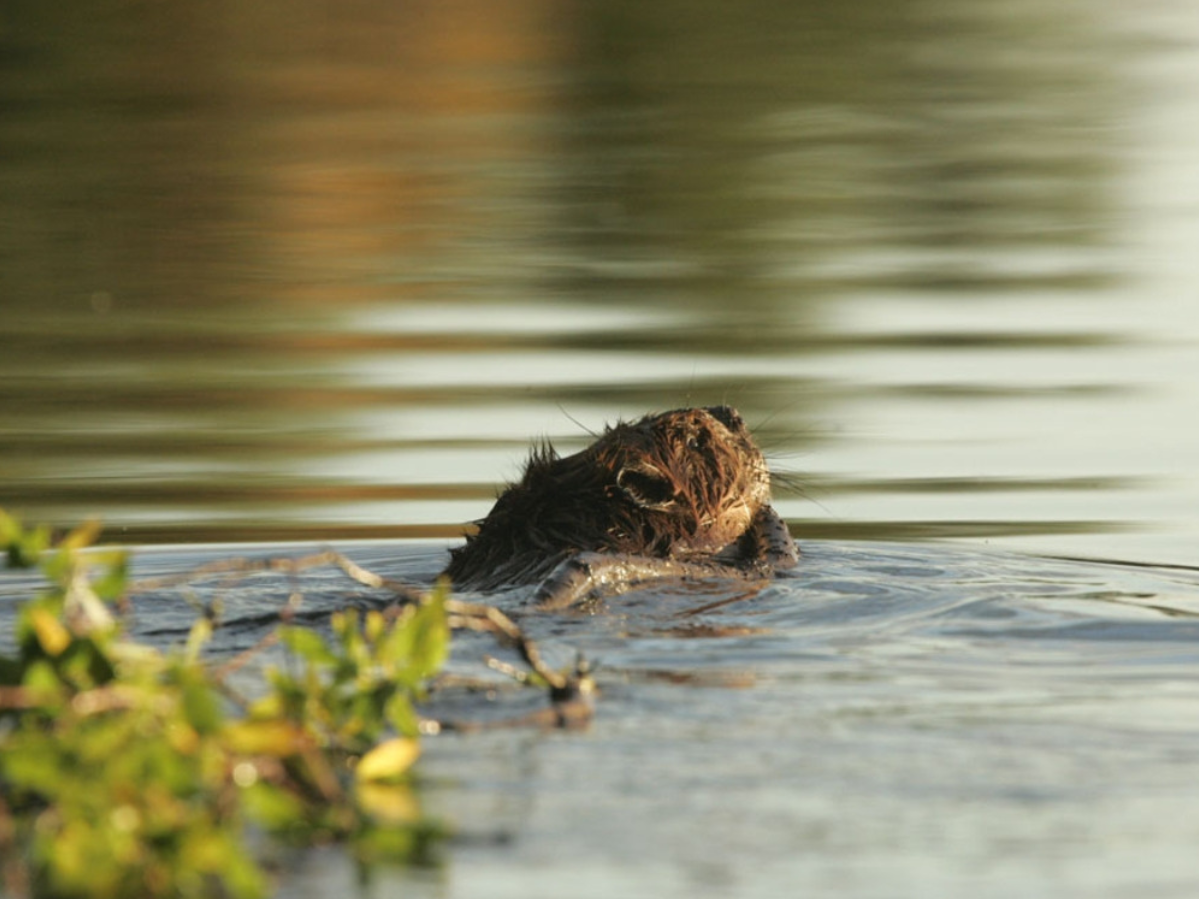
‘With great power comes great responsibility’ is how the quote goes. The beaver may look deceptively unremarkable with its girthy midsection and lack of neck, but make no mistake, it is powerful. When a beaver moves in, the entire ecosystem shifts. Groundwater spreads, erosion slows, young fish grow in the nutrient-rich ponds, a ‘hotspot’ of wildlife activity blossoms, and a natural break for wildfires is created. When the beavers are gone, the soil, plants, and other species (including humans) all feel a little thirstier.
Did You KNOW…
The North American beaver is the second-largest rodent in the world, ceding the title of largest to the capybara.
Beaver incisors (front teeth) never stop growing during a beaver’s lifetime. They’re naturally trimmed by beavers’ woody diets; if, due to injury or sickness, a beaver can’t keep its teeth trimmed, the teeth can overgrow and prevent a beaver from opening its mouth, posing a serious health risk.
Castoreum, made by the beaver’s castor sac glands, has been used by humans for over 2000 years- as a perfume, an FDA-approved edible artificial vanilla used most heavily in the 70s and 80s, and as bait for traps and snares.
A beaver can hold its breath for up to 15 minutes, though most dives average about 5 to 6 minutes.
Scientific and Common Names
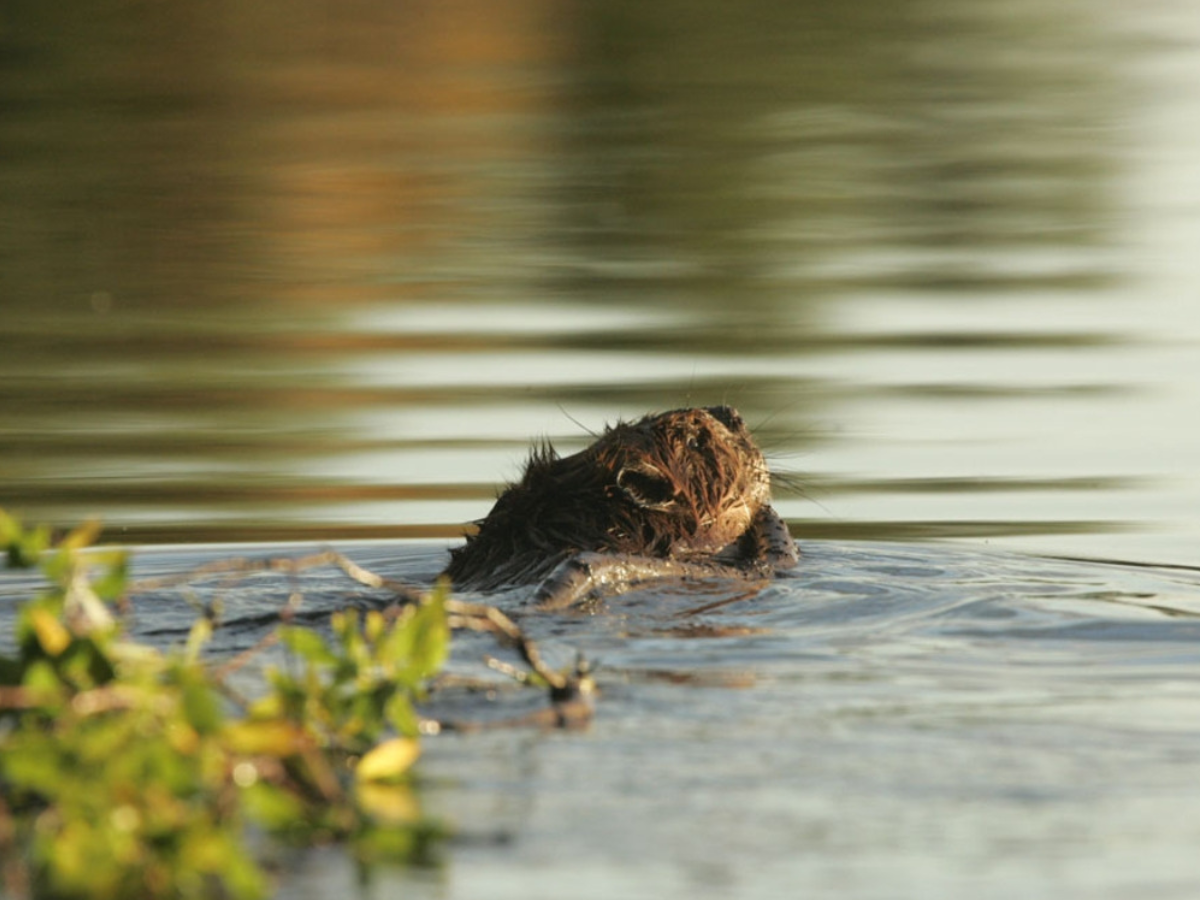
Known in scientific circles as Castor canadenis, but goes by as many names as the cultures it has impacted. The local Dena’ina people know it as k’enuy’a.
General Description
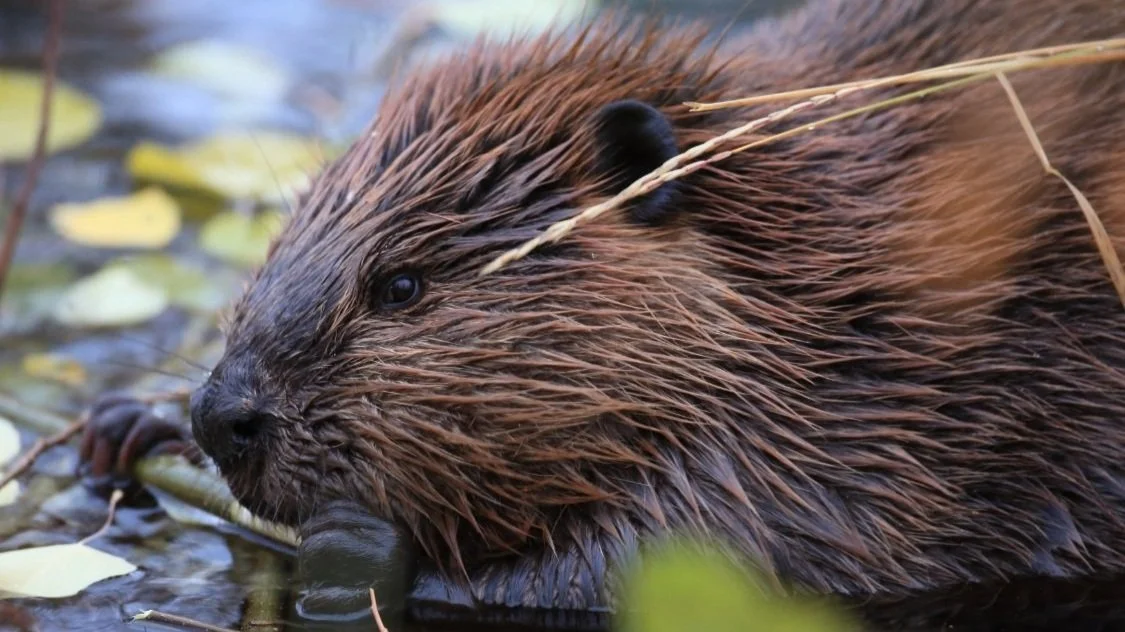
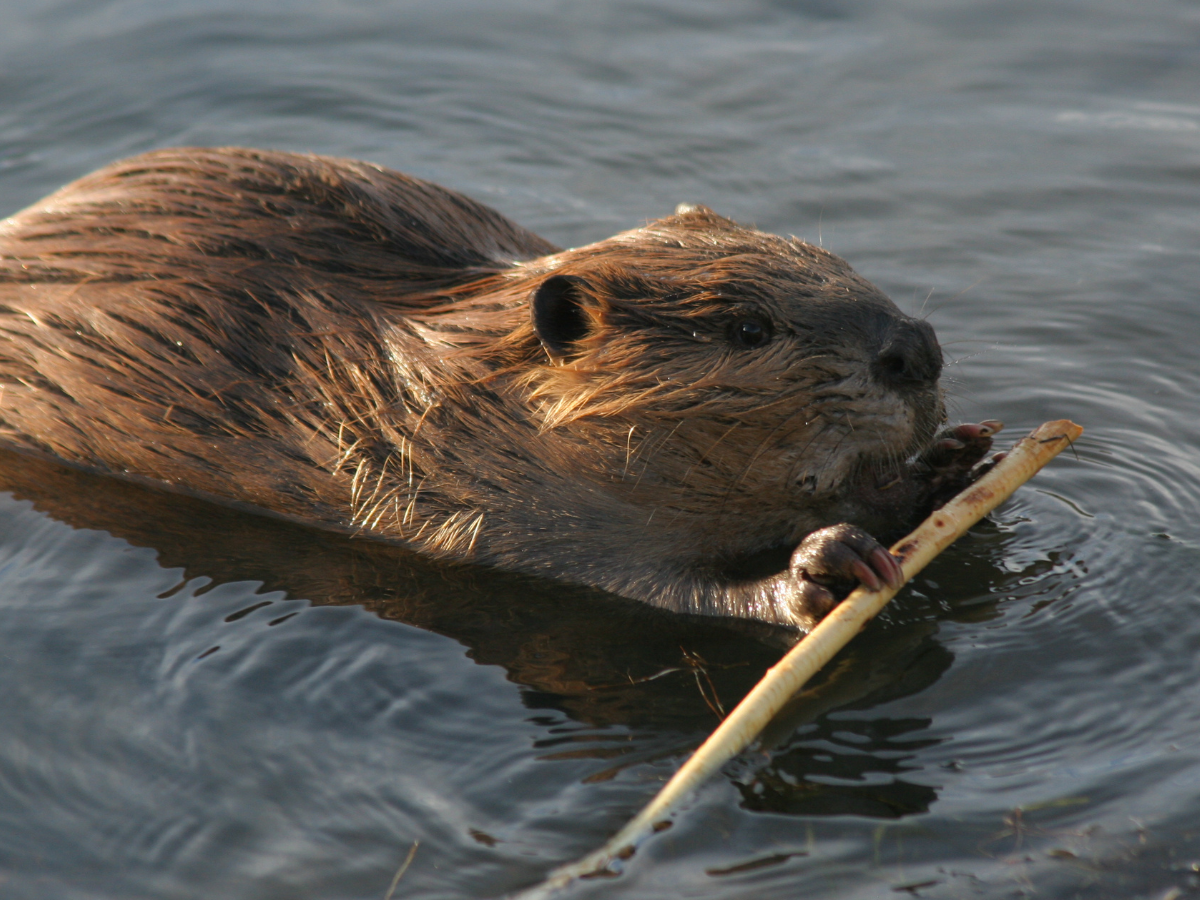
Adult beavers are typically three to four feet long and 35 to 65 pounds, although the record beaver caught in 1921 weighed a shocking 110 pounds! They have dense fur, which is already water-resistant, and can become all but water-proof after being coated with oil from the caster sac gland. Coat colors range from a yellow-brown to almost-black, and all individuals are equipped with a flat-broad tail coated in scales, which can be used as a rudder, as a method of alerting others of dangers (thumping tail), and a ‘tripod’ leg for balance whilst working on land.
Beavers are primarily nocturnal, but can be observed going about their activities at dawn and dusk as well. These odd hours help them to avoid predators and vary with season, latitude, and human disturbance. Beavers spend much of the winter holed up in their dens.
If you’re looking for a beaver, your best chance is to look for its signs first! Evidence of damming (sticks and mud), tracks, ‘chew sticks’ and floating food caches are all great indicators of beaver activity.
Range AND Habitat
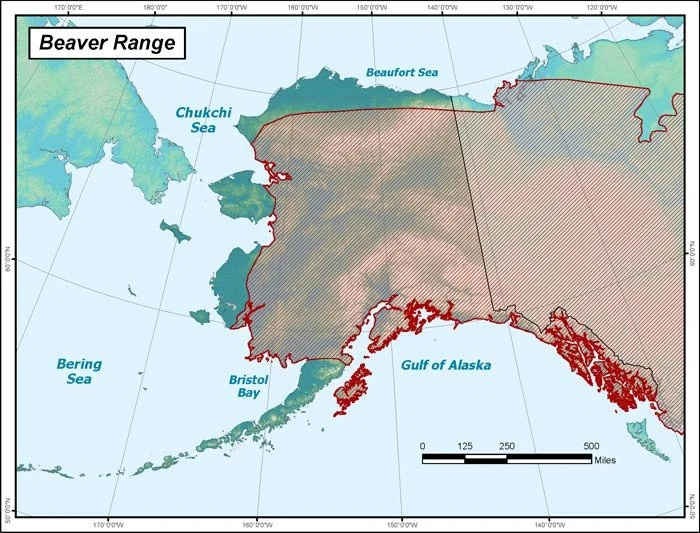
Map from ADFG.
To thrive, beavers need two main ecological features: water and trees. Wetlands, marshes, rivers, ponds, and lakes are all viable habitats. Their primary food sources are deciduous woody species like aspen, willow, and birch, and they range from the subarctic tundra of Alaska and Canada through the contiguous United States and into parts of northern Mexico.
With such simple needs, beavers were prolific before European colonization of the continent, and population numbers were estimated to be as high as 60 to 400 million. Europe’s colonization of the Americas and ‘discovery’ of its beaver as a resource was timely since the Eurasian beaver was all but gone, and the demand for their dense fur was still high. Russians, French, English, and Dutch trappers started at the coasts and pushed inland on the bonanza, and “by the early 1900s, there was scarcely a beaver to be found south of the forty-ninth parallel and throughout much of Canada” (CanadianGeographic 2013). A large study in 1986 estimated beaver populations on the continent to be between 6 and 12 million.
Here in Alaska, the requirement to seal and tag individual beaver pelts harvested through trapping did not take effect until 1923. Before then, obtaining accurate annual harvest numbers was much more difficult, and illegally taken furs could be traded more easily. As a result, beaver populations have declined steadily in areas where they were historically prevalent.
In addition, as the climate changes and temperatures rise, the movement of those delectable deciduous species north into the Arctic Tundra has led to some populations of beaver moving north into areas where they historically were not.
Life History And Diet
In Alaska, one has to prepare differently for the seasons. During warmer months, beavers will eat fresh vegetation, including the cambium layer of woody plants, grasses, roots, and aquatic plants. They also spend the warmer months storing a cache of woody snacks that will be accessible from the den when things have frozen over, and fresh vegetation is no longer available. During the winter months, the beaver will not hibernate and may not go out while the water is frozen over, preferring to stay warm and safe within their lodges with their colony members and eating from their cache.
Beavers have strong familial bonds and form monogamous pair bonds for life. A colony of beavers usually consists of the mating pair and 5 to 8 of their offspring of varying ages, who will eventually disperse at around age 2 to attempt to create their own colony. Beaver kits' eyes are open at birth; they can swim at 4 days old and dive at 2 months old. A beaver mum will produce one litter of 1 to 6 kits each year, so it is both necessary and dangerous for young beavers to leave their home colony and attempt to create their own. Beavers can live up to 10 to 12 years.
Threats and Concerns
As a keystone species, beavers have a significant impact on the world around them, so their presence or absence has an observable domino effect. Known as ecosystem engineers, they are the landscape architects and hydrologists of the planet. Where they build their dams, biodiversity often follows, and wildlife habitat grows. Their ponds and dams trap sediment, improve water quality,, increase groundwater levels, and reduce erosion.
Threats to the beaver include predation (wolves, coyotes, lynx, bears, and dogs) as well as the more significant impacts of human trapping and habitat loss. Wetlands and peatlands are frequently underprioritized as ecosystems and often drained for agricultural or industrial purposes. Climate change can also accelerate the drying out of peatlands through increasing temperatures and altering precipitation patterns.
Beavers rely on peatlands for vegetation and habitat, while peatlands rely on beavers to help keep them store water. On the Kenai Peninsula, peatlands are drying out at a rate of 6 to 11% of the surface area per decade, and beavers have been trapped out of many drainage systems. We’re working with KBNERR, Ninilchik Traditional Council, and other partners to help quantify the impacts of beavers on the Kenai and are exploring how beavers can help rewet the peatlands in certain areas.
Cultural Significance
The significance of the beaver is a worldwide and varied phenomenon. Around the 1700s, Chinese aristocracy used the lush fur as a way to demarcate their status. In the 1800s, Europeans utterly needed a beaver fur hat to be considered acceptable in fine society. For several hundred years, beavers were collected by the Russians and the Americans for their livelihood and profit. However, all of the aforementioned cultures failed to treat the beaver as its own entity, innately worth more than the current market price of its fur and glands.
For many Native cultures, this was historically not the case. Here in Alaska, the Athabascan people have respect for all plants and animals, nudnelyahi ch’u qeneshi, as one of their core values. These things have spirits too and so must be treated with honor and respect, lest they no longer choose to allow themselves to be gathered/hunted and leave the people hungry. When a beaver was taken, it was with its life in consideration (is this a stable colony or something in need of time and space?), its whole body was utilized (fur, meat, fat, bones, and glands), its spirit was thanked afterwards, and stories would be told to children to continue the culture of respect.
It is because of this differing cultural value system that western biological science is now being noted for some of its limitations, and TIK (Traditional Indigenous Knowledge) is starting to be embraced for some strength and wisdom that its counterparts lack.
Kelsi Starling is an intern working with Ninilchik Traditional Council, AWA, and KBNERR to support fieldwork, communications, and outreach related to beaver restoration and research on the Kenai Peatlands.
