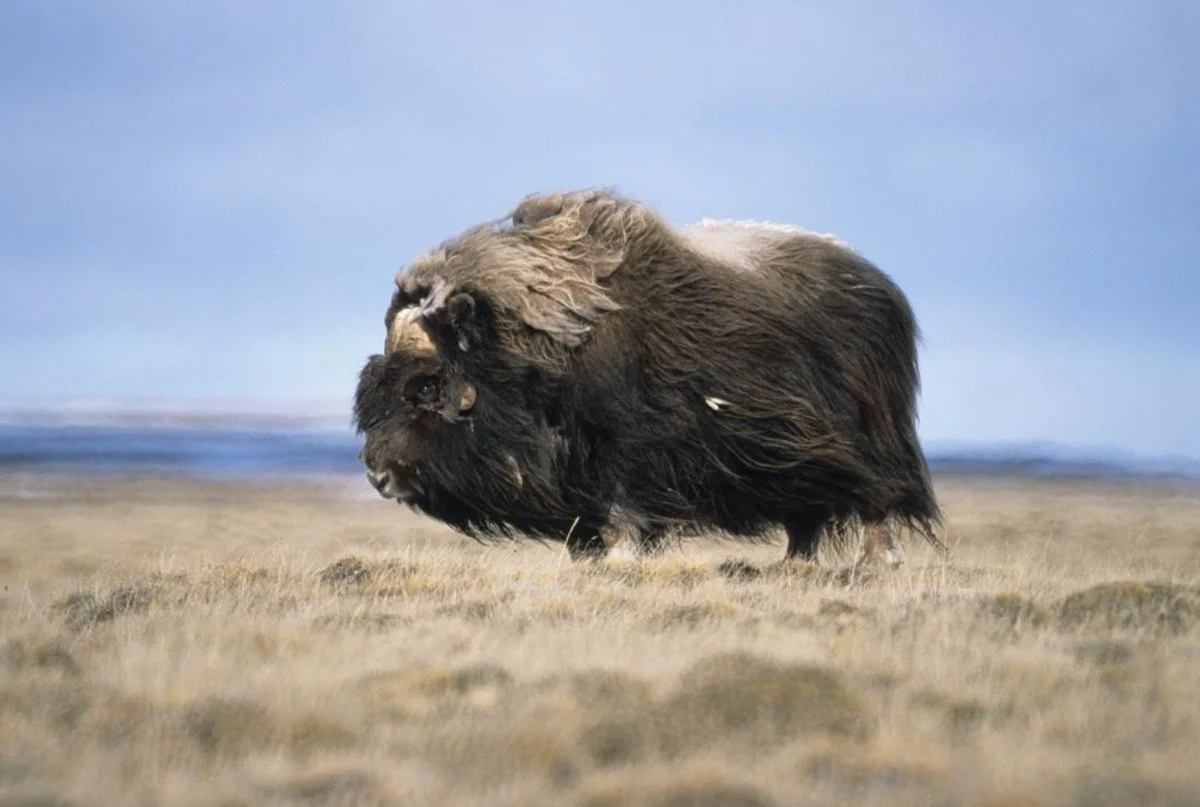
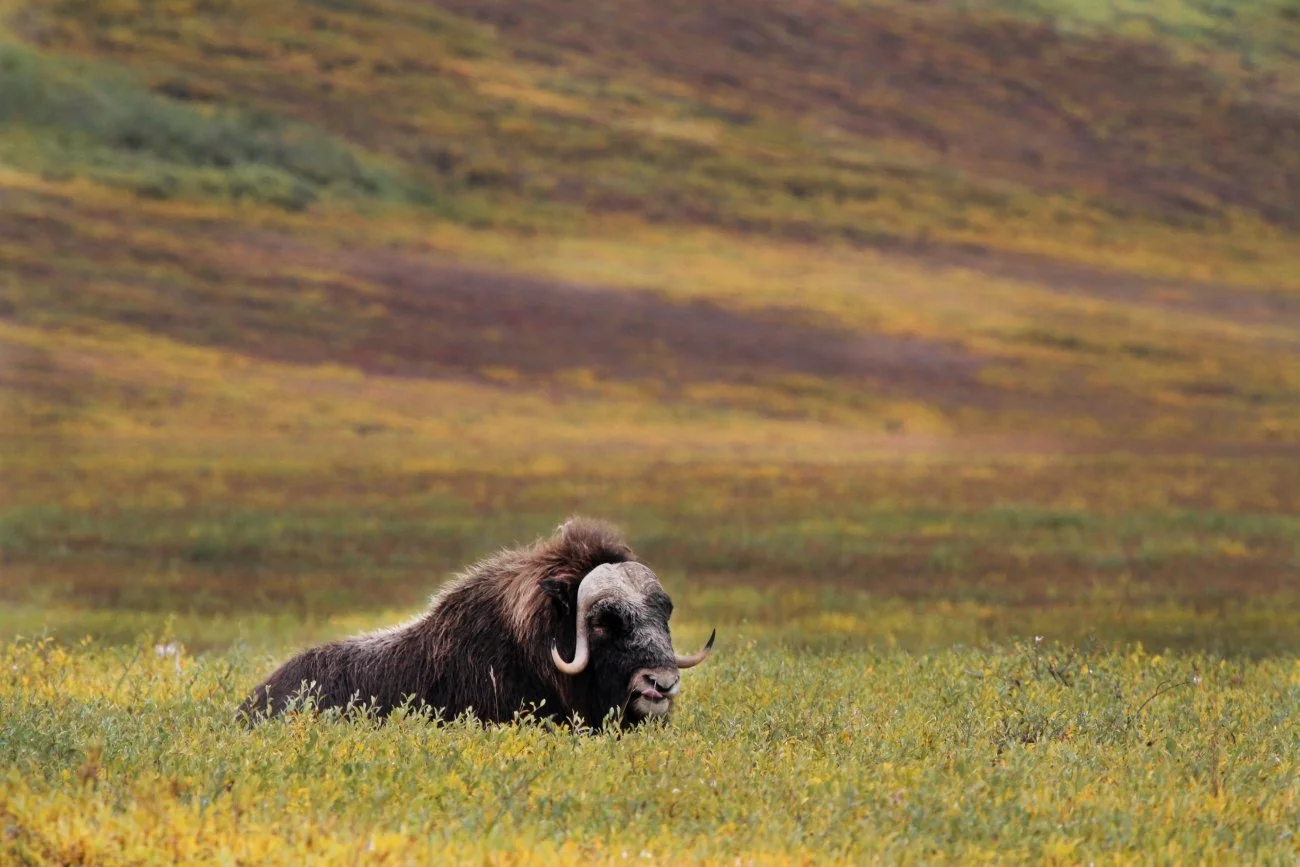
Photo credit: Katrina Liebich, USFWS.
The Musk Ox
The Bearded One.
The musk ox has roamed the Arctic for tens of thousands of years; the modern genus is first known in the fossil record in the Middle Pleistocene, about 1.5 to 2 million years ago. Known as Oomingmak, or "the bearded one," by the Iñupiaq people of Arctic Alaska, this Ice Age survivor has outlived woolly mammoths and many other prehistoric animals.
With its thick double-layered coat—including the incredibly warm underwool called qiviut—the musk ox is perfectly adapted to life on the Arctic tundra, where winter temperatures can drop below –40°F. Although successfully reintroduced to Alaska after being hunted to local extinction in the late 1800s, musk oxen continue to face challenges from climate change, habitat changes, and declining populations in parts of the state. Today, they can be found in northern Canada, Greenland, Alaska, Norway, Sweden, and Siberian Russia.
Did You Know…
Despite their name, musk oxen are more closely related to sheep and goats than to true oxen or cattle.
The musk ox gets its name from the strong musky scent males produce during the breeding season to attract females.
Musk oxen grow an incredibly soft underwool called qiviut, one of the warmest and rarest natural fibers in the world.
The musk ox is one of the few surviving Ice Age mammals, having changed remarkably little since the Pleistocene. Fossils of prehistoric musk oxen can be seen at the University of Alaska Museum of the North in Fairbanks.
Musk oxen have horizontal pupils that give them a wide field of view, helping them detect predators across the open Arctic tundra.
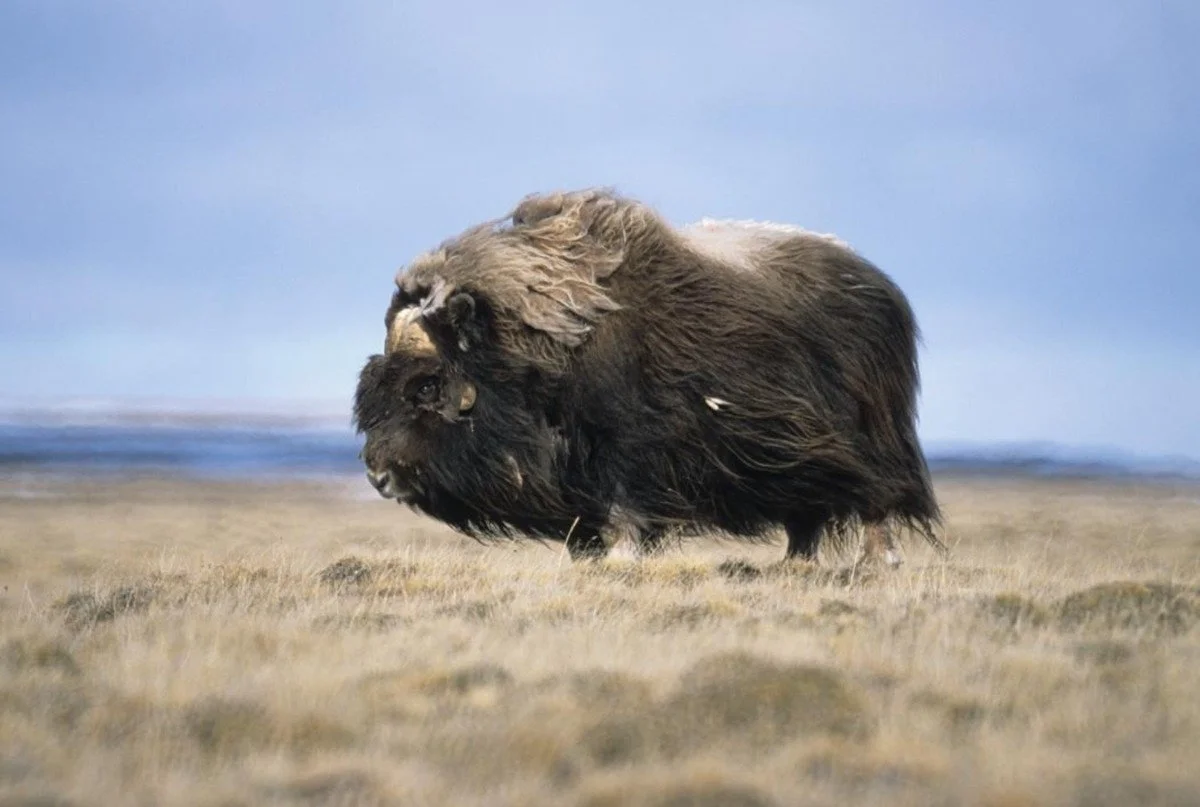
Photo credit: Tim Bowman, USFWS.
SCIENTIFIC AND COMMON NAMES
Ovibos moschatus. Oomingmak in Iñupiaq, meaning “the bearded one.”
GENERAL DESCRIPTION
The musk ox is a stocky, powerful Arctic mammal with a large body, short legs, a slight shoulder hump, and a very short tail. Adult males, known as bulls, typically stand about 4–5 feet tall at the shoulder and weigh approximately 600–900 pounds. Females, known as cows, are smaller, generally standing around 4 feet tall and weighing 350–500 pounds.
Both male and female musk oxen grow horns that they keep throughout their lives. Bulls have larger, heavier horns with a prominent horn boss (a thick, bony structure on the forehead) used during head-to-head clashes with other males during the breeding season. Their horns and thick skulls also provide protection against predators and are used in dominance displays.
Although musk oxen are not long-distance migrants like caribou, some populations make seasonal movements in search of food. Their large, rounded, widely splayed hooves provide excellent traction on snow and ice and act like shovels, allowing them to paw through snow to reach grasses, sedges, and other tundra vegetation.
A musk ox’s survival in the Arctic depends on its remarkable coat. It has two layers of insulation: a long, coarse outer layer of guard hairs and a dense, soft underwool called qiviut (pronounced KIV-ee-oot). The guard hairs can grow nearly to the ground, protecting the underwool, shedding snow and moisture, and helping shield the animal from wind and insects. The qiviut layer is one of the warmest natural fibers in the world and is shed each spring as temperatures rise.
During the harsh Arctic winter, musk oxen conserve energy through their compact body shape, thick insulation, and efficient metabolism. Rather than wasting energy on unnecessary movement, they reduce activity and may spend long periods standing or resting while relying on stored body reserves and limited vegetation available beneath the snow.
RANGE and Habitat

Photo credit: ADFG.
Musk oxen live farther north than most other hoofed mammals and are uniquely adapted to the Arctic tundra. Their native range includes Greenland, Arctic Canada, and Alaska, with reintroduced populations also found in parts of Norway and Russia.
In Alaska, musk oxen are found primarily in western and northern regions of the state, including Nunivak Island, Nelson Island, the Seward Peninsula, the Yukon–Kuskokwim Delta, and parts of the North Slope. Managed and domestic herds can also be found in other areas of Alaska.
During the summer, musk oxen occupy areas with abundant vegetation, including wet tundra, river valleys, and lowland meadows with grasses and sedges. In winter, they move to higher elevations, including windswept ridges and areas with shallow snow where food remains accessible. Although musk oxen are highly adapted to Arctic winters, they are poorly suited for digging through deep, hardened snow and ice to reach vegetation.
A Conservation Success Story in Alaska
By the early 20th century, musk oxen had disappeared from Alaska due to overhunting. Concern about the species’ decline led to efforts to restore musk ox populations in the state.
In 1930, the U.S. government relocated 34 musk ox calves from Greenland to Alaska as part of a conservation effort. The calves were first raised near Fairbanks before being moved to their permanent home on Nunivak Island in 1935 and 1936. The reintroduction was highly successful, and the Nunivak Island herd became the foundation for later musk ox translocations throughout Alaska. Today, there are about 5,300 musk oxen in Alaska.
Life History and Diet
Musk oxen breed during the late summer and early fall, typically from July through September. During the rut, mature bulls compete for access to females through displays of strength and dominance. After a gestation period of approximately 8–9 months, cows give birth to a single calf in the spring, usually between April and June. In years when food is limited or winter conditions are severe, some females may delay reproduction and skip breeding.
Newborn calves weigh approximately 20–35 pounds and grow rapidly during their first year of life. Calves remain close to their mothers and benefit from the protection of the herd’s defensive formation. Females generally reach adult size by 3–4 years of age, while males continue growing and developing larger horns and body size for several years. Musk oxen can live approximately 15–20 years in the wild.
As young bulls approach maturity, they may leave their family herd and form bachelor groups with other males. Older bulls compete for breeding opportunities during the rut through dramatic displays of dominance. After warning postures, vocalizations, and threats, competing bulls may charge toward each other and collide head-on, striking their thick horn bosses together. These contests can be repeated many times until one bull establishes dominance or retreats.
Musk oxen are herbivores that feed primarily on grasses, sedges, willows, and other tundra plants. During the short Arctic summer, they take advantage of abundant green vegetation, including flowering plants and shrubs. In winter, they rely on their strong hooves to paw through snow and ice to reach buried vegetation. Because they are ruminants, musk oxen have a specialized digestive system that allows them to extract nutrients from tough, low-quality Arctic plants.
Their ability to survive on limited forage makes them highly adapted to the Arctic environment, but severe winters, deep snow, and rain-on-snow icing events can make food difficult to access and affect survival and reproduction.
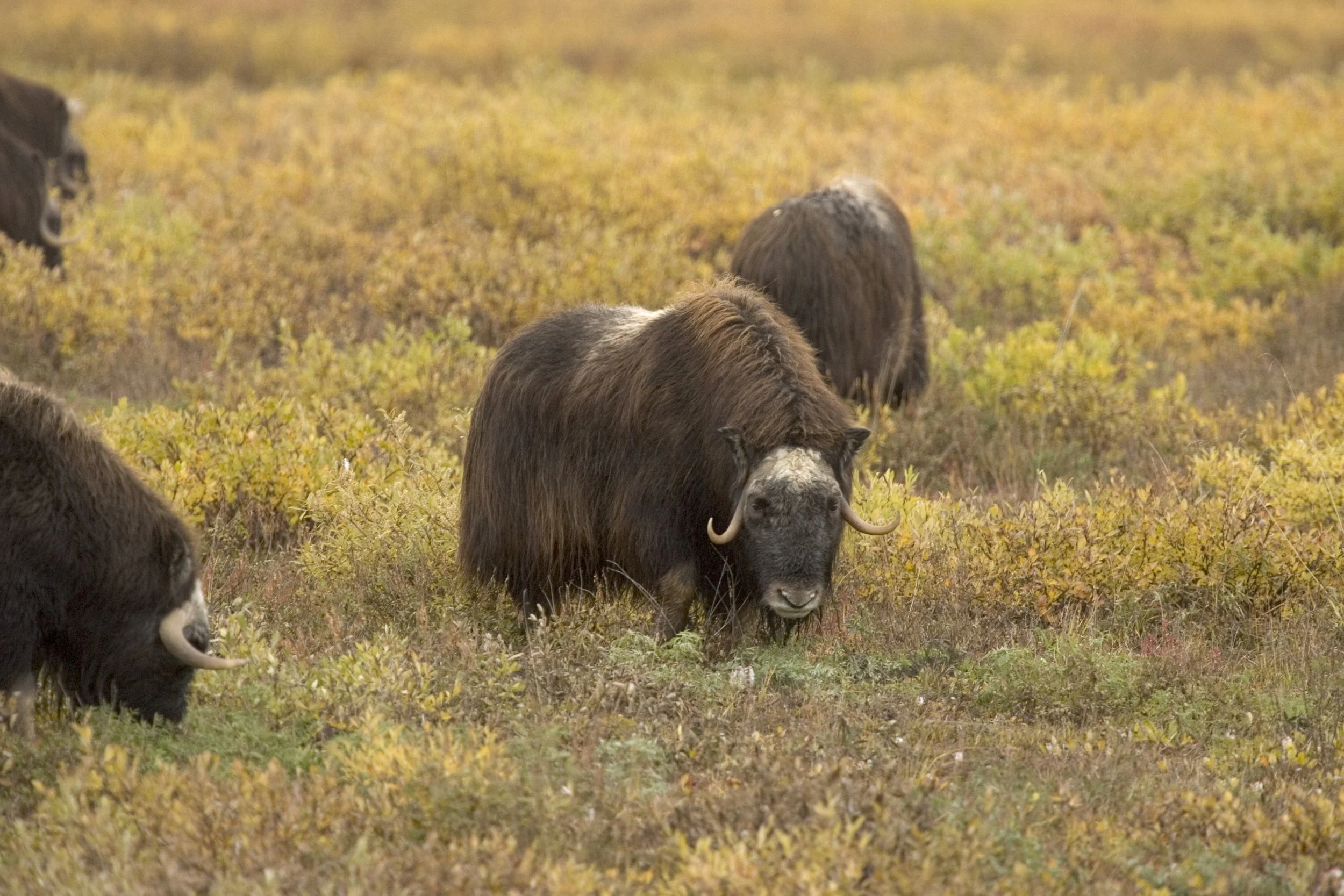
Photo credit: Steve Hillebrand, USFWS.
THREATS/CONCERNS
When threatened, musk oxen use one of the Arctic’s most impressive defense strategies: forming a protective circle or line with adults facing outward, heads lowered, and calves sheltered safely in the center. This defense is effective against many predators, but it can make musk oxen more vulnerable to human hunters because they often stand their ground rather than flee.
Musk oxen once lived throughout Alaska but disappeared from the state by the late 1800s due largely to overhunting. Reintroduction efforts beginning in the 1930s successfully restored populations, and Alaska is now home to approximately 5,300 musk oxen.
Some Alaska herds have declined in recent years, including populations in and around the Arctic National Wildlife Refuge. The causes are not fully understood but may include changes in weather, habitat, forage availability, predation, and disease.
Climate change is an ongoing concern. Warmer temperatures are increasing winter rain and freeze-thaw events, which can create thick ice layers that prevent musk oxen from reaching food beneath the snow. Changing vegetation and disease patterns may also affect their long-term survival.
