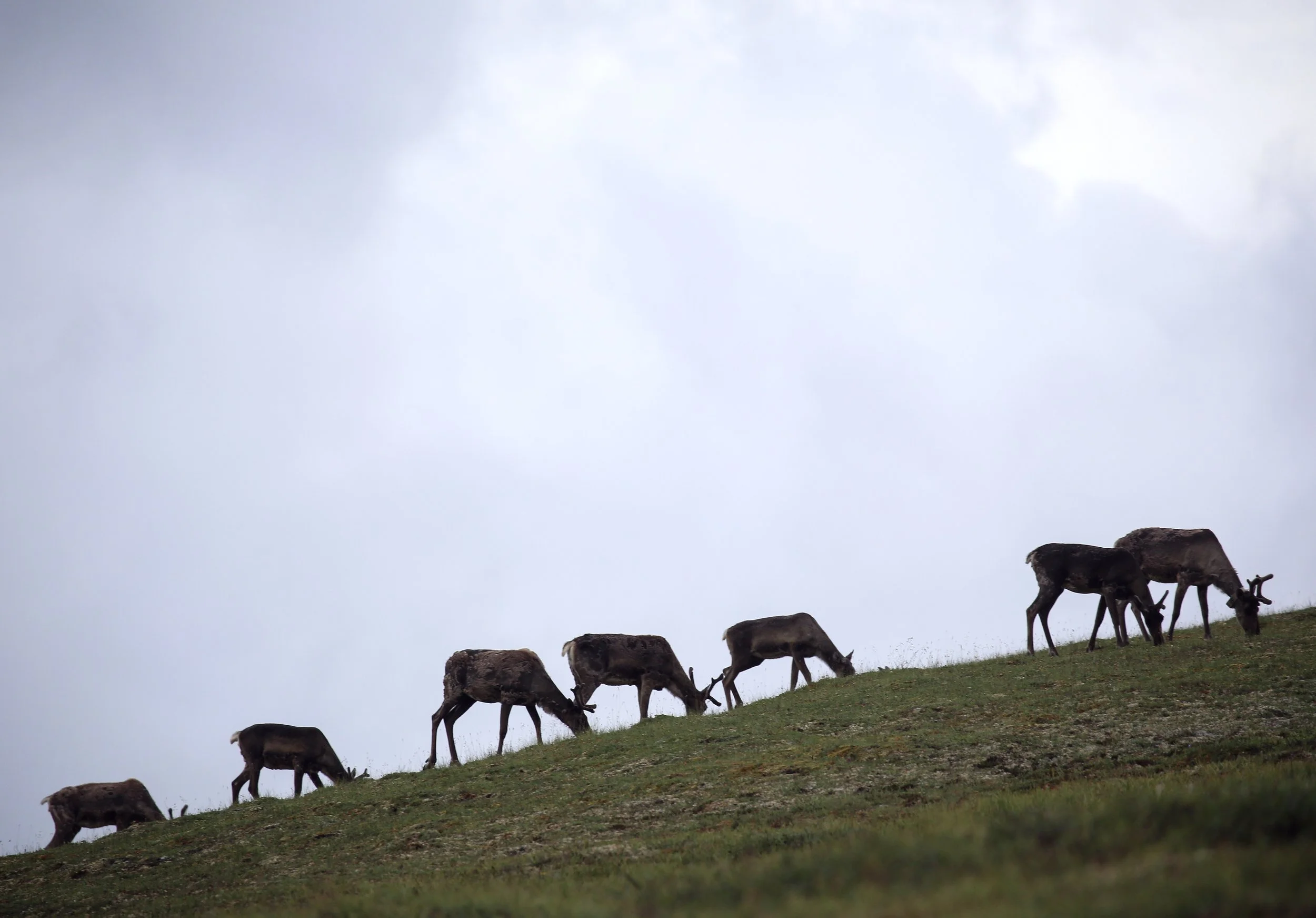
Photo credit: Emily Mesner.
How Your Vote Can Shape Alaska’s Wild
From the Governor’s office to the Board of Game, learn how elected officials shape wildlife management across Alaska.
By Nicole Schmitt
Alaska is the only Arctic state in the nation, home to some of the most diverse and unique species in the world. Wildlife has intrinsic value in Alaska’s ecosystem; they are the foundation of many local economies, a critical source of subsistence, and a cornerstone of the state's cultural identity. When Alaskans head to the polls for the state election, we aren't just voting on taxes or education; we are directly shaping how moose, salmon, bears, and caribou will be managed for years to come.
Because of Alaska's unique regulatory structure, the Governor and the State Legislature hold immense power over wildlife and habitat policy. Here is a breakdown of how your vote impacts Alaska’s wildlife. The people you elect to the Governor's mansion and the statehouse determine who sits on the boards, who runs the department, and ultimately, how Alaska's wildlife is managed for the next generation. Of all the authorities, it is argued that the Governor holds the most influence over fish and wildlife management decisions: the Governor appoints the Board members, who in turn select the finalists for the Commissioner position, who manages the Department’s staff and policy.
The Governor: Setting the Direction
The Governor serves as the chief executive of the state and sets the overarching philosophy for natural resource management. Most importantly, the Governor holds the power of appointment, nominating the individuals to the Board of Fish and Board of Game. These are the 14 individuals who decide the rules for every hunter and fisher in the state.
The Legislature: The Check (literally) and the Balance
The State Legislature plays two critical roles in wildlife management. First, they write the statutory laws that govern fish and game, such as establishing intensive management mandates or setting broad habitat protection standards. Second, they control the purse strings, holding the final say on the Alaska Department of Fish and Game (ADF&G) budget.
The Legislature also acts as the ultimate check on the Governor's power through the confirmation process. The men and women nominated to the Boards of Fish or Game must be confirmed by a joint session of the House and Senate. Most nominees make it through the confirmation process, but occasionally the legislature steps in. For example, the last time a nominated member was not confirmed was in 2021. Abe Williams was nominated to the Board of Fish by Governor Dunleavy, but the legislature rejected his appointment in a bipartisan 41-18 vote. Williams was an employee of the Pebble Limited Partnership, and his nomination faced intense pushback from Alaskans opposing the proposed Pebble Mine.
Board of Game and Board of Fish: The Power Players
The day-to-day rules of hunting and fishing—season dates, bag limits, gear restrictions, and highly debated allocative decisions between commercial, sport, and subsistence users—are not made by the Legislature, Governor, or ADF&G. They are made by the Alaska Board of Game and the Alaska Board of Fish.
Each board consists of seven members who serve three-year terms with no term limits. The Governor hand-picks these members, but they must be confirmed by a joint session of the State Legislature. Voting for a Governor and legislative representatives means voting for the political philosophy that will dominate these powerful, rule-making boards.
ADF&G Commissioner: The Leadership
The Commissioner of ADF&G is the cabinet-level, principal executive officer of the department. The Commissioner supervises and controls the Department staff, exercises administrative and fiscal authority over department operations, can issue emergency orders to adjust fisheries and hunts temporarily, and serves as a primary liaison to the Governor’s office, the state legislature, federal agencies, Tribes, and boards.
The Commissioner also has unique power in appointing leadership within the Department, specifically the Director of Wildlife Conservation. The Director of the Division of Wildlife Conservation serves as the top executive leader overseeing the State’s wildlife management, research programs, and regulatory collaboration. While directors are often promoted from within the ranks of experienced agency biologists and regional supervisors, the final selection rests entirely with the current administration's leadership. Thus, the Commissioner has immense power in setting the tone for the State’s wildlife management paradigm in their appointment of division directors.
Because the Commissioner has so much power over the State’s management of fish and wildlife, Alaska uses a unique process to fill the role.
Instead of a direct Governor appointment, the Board of Game and the Board of Fish meet in a "Joint Board" session to interview candidates. This Joint Board submits a list of qualified nominees to the Governor. The Governor then selects the Commissioner from that specific list, and the appointee must then be confirmed by a majority vote of the Legislature in a joint session.

Here are some resources to help you learn more about candidates and the election process
How to learn about candidates:
2026 Alaska Voter Guide: The Alaska Beacon staff, in collaboration with Anchorage Daily News, Alaska Public Media and KTOO, asked every Alaska candidate for U.S. House, U.S. Senate, governor and legislature their positions on several questions, drawing from input from readers. Most candidates responded to the questionnaire. Along with their answers, the guide includes some basic biographical information, their party affiliation, whether they are incumbents and links to their campaign sites. The guide also includes information about each district, as well as the term length and salary for each position.
Alaska State House and Senate Guides by District (Not sure what district you’re in? Look at these maps to find out!)
You can also view all candidate information in the State of Alaska Official Election Pamphlet.
How to Vote: You can visit the Alaska Division of Elections website for all information.
When: Early voting is open from October 19th - November 2nd.Voting hours vary by location. A list of early voting sites is online at elections.alaska.gov/avo. Voters can also request a mail ballot, for any reason, before Oct. 24.
Election Day is November 3rd: Polls will be open on Election Day, Nov. 3, from 7 a.m. to 8 p.m.
Where: Polling places are listed at https://www.elections.alaska.gov/avo/ or on the state’s interactive map.
What do you need to bring?: Voters will need to present valid identification to the poll worker. In Alaska, those include a voter ID card, driver's license, state ID, other photo ID, passport, hunting or fishing license or another document with the voter’s name on it.
