New Hunting and Trapping Regulations in Southcentral Alaska
Learn what happened at the SouthCentral Board of Game Meeting.
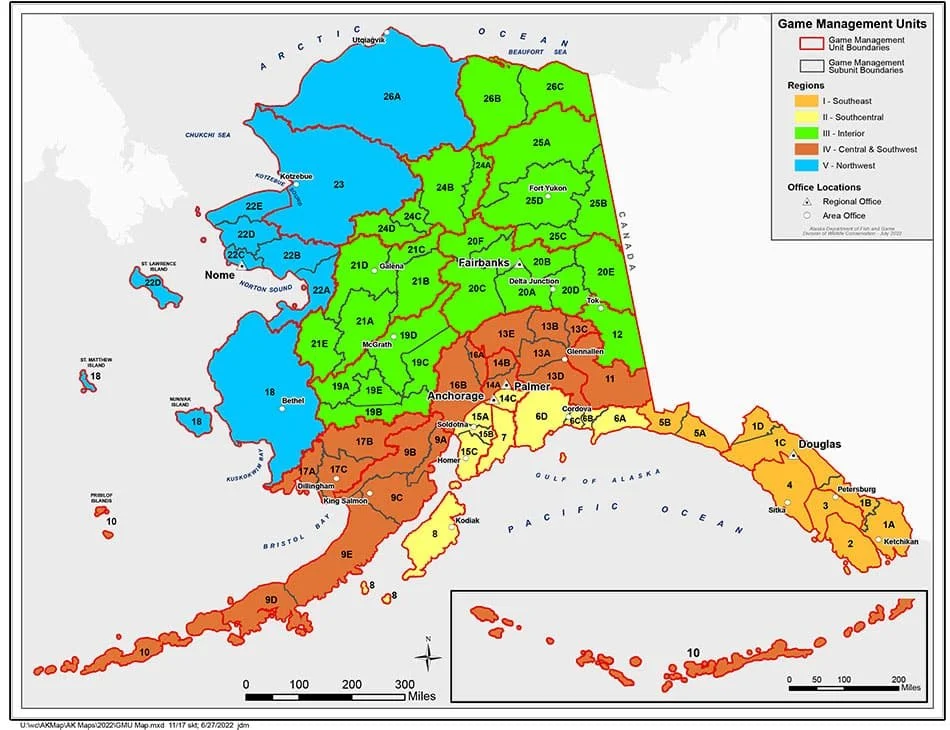
The Southeast game units are highlighted in orange.
The Alaska Board of Game (BOG) is responsible for making decisions on wildlife management in Alaska, including population and harvest objectives and hunting regulations, which are then implemented by the Alaska Department of Fish and Game (ADFG). Proposals are submitted by the public, ADFG, and Advisory Committees, and then deliberated upon by the Board, by region on a rotating basis with a three-year cycle (watch our whiteboard video to learn more!). This year, the Board accepted Southcentral proposals. A public comment period was held before the Board deliberation meeting.
Alaska Wildlife Alliance attended the Southcentral Board of Game Meeting in Kodiak in March as a voice for Alaska’s wildlife, giving testimony, mobilizing public comment on proposals, and observing deliberations. This meeting was to deliberate on hunting and trapping regulations in the yellow area above, including Prince William Sound, Kenai, Kodiak, and the Anchorage area.
What is the Board of Game?
The Board of Game consists of seven members, each serving three years. There are no term limits. Members are appointed by the Governor and confirmed by the legislature.
The Board makes decisions regarding game management in Alaska, including population and harvest objectives and hunting regulations. These decisions include when to open and close seasons, areas for hunting and trapping, bag limits, methods and means, setting “policy and direction” for state wildlife management, allocative decisions, and deciding population objectives across the state.
The Alaska Department of Fish and Game (ADFG) is then responsible for enacting management based on those decisions.
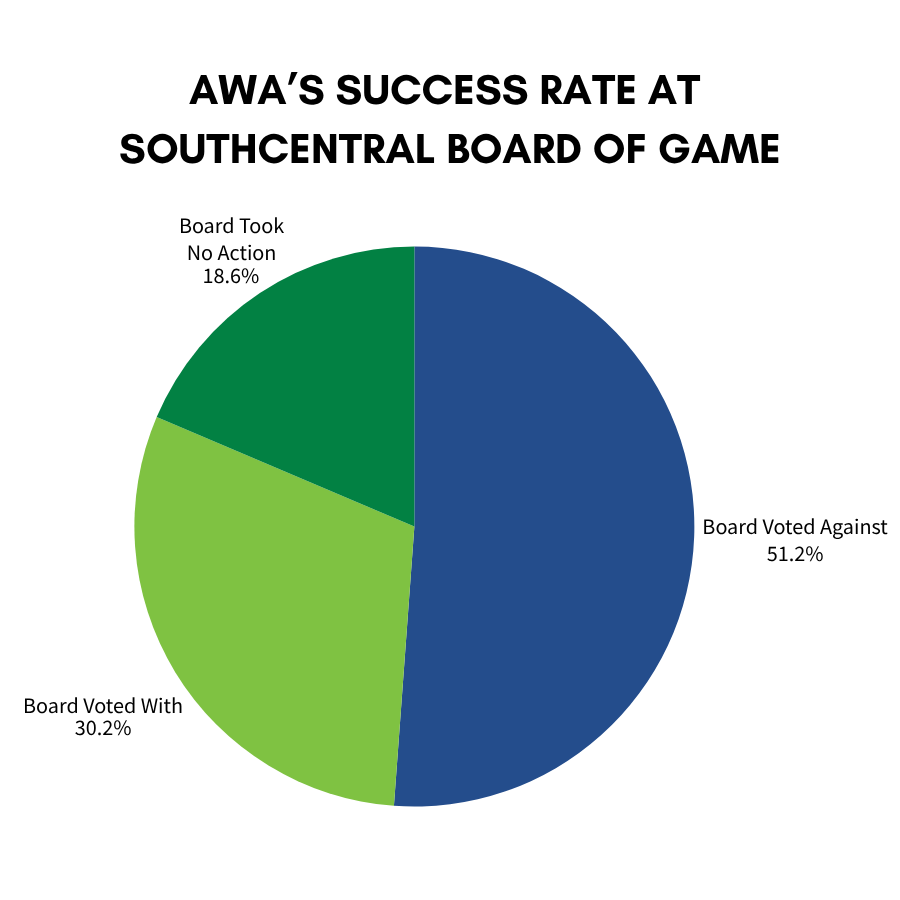
Overall, AWA submitted comments on 43 proposals. Of those, the Board ‘took no action’ on 8 proposals we commented on.
The Board of Game voted with us on 13 of the proposals they took action on, for a 30% success rate, and voted against us on 22 proposals, for a 51% failure rate.
Keep reading for a breakdown on the key proposals we were watching!
Let’s start with the good news:
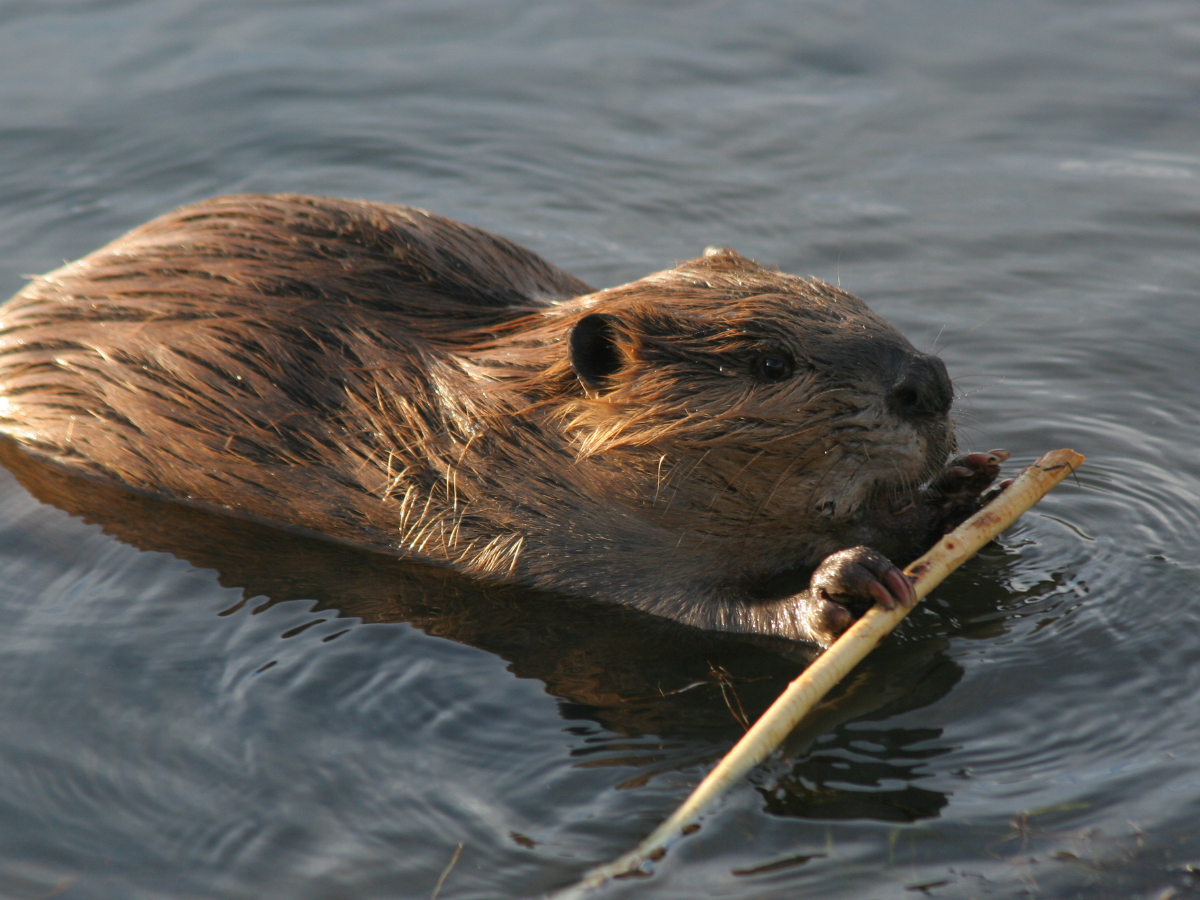
Beaver trapping is closed in the Anchor River drainage on the Kenai Peninsula. The Kenai contains thousands of acres of peatlands, an essential ecosystem that provides habitat for species like moose and young salmon, helps reduce flooding, and lowers wildfire risk. Beavers play a crucial role in maintaining these peatlands, but they have been trapped out of many waterways, including the Anchor River. Without beavers, the Kenai’s peatlands are increasingly drying out, increasing the effects of climate change.
AWA has been working with Kachemak Bay National Estuarine Research Reserve, the University of Alaska Center for Conservation Science, and the University of South Florida to demonstrate that beavers and their dams can combat climate change on the Kenai. Anchor River is an area that we may look to reintroduce beavers, and those beavers now have a chance in that drainage with the trapping closure.
We’re hoping to use the trapping closure to work with local organizations and ADFG to restore beavers to the landscape and quantify their impacts on peatlands. Learn more about our beaver work here, and stay tuned for more updates this summer.
Some roads and pullouts in Cooper Landing will now have 50-yard trapping setbacks. These roads include sections of Quartz Creek, Old Sterling Highway, Bean Creek, West Juneau Bench, and Snug Harbor Roads, among others, as well as all DOT-designated vehicle pullouts from Tern Lake to Russian River Ferry.
Bears get a reprieve on the Kenai, on Joint Base Elmendorf-Richards, and in Prince William Sound. The brown bear hunting season on the Kenai Peninsula was shortened by 15 days to help reduce the take of sows during the spring, while a proposal to extend the black and brown bear hunting season in the Anchorage area failed.
A proposal to increase the resident black bear bag limit in Prince William Sound from one to two bears also failed. Since the opening of the Whittier Tunnel in 2000, harvest has more than tripled, and the hunting pressure is the highest it's ever been. ADFG does not know the population of black bears in the Sound, and is concerned about the increasing harvest.
If a hunter wounds a black bear on the JBER military base, it will now count towards that hunter’s bag limit. AWA supports counting wounded game animals towards a bag limit as we believe it promotes ethical hunting.
Lastly, the Board tabled setting the harvest thresholds for sheep as an Intensive Management species until the next Statewide meeting in two years. In 2025, the Board added sheep as a prey species under the Intensive Management (IM) statute, which could allow the state to conduct predator control near sheep populations. Other IM species include caribou, deer, and moose.
AWA strongly opposed sheep being added to IM. To qualify for IM, species must provide “high levels of human consumptive use; on average, hunters take 25,000 caribou, 10,000 deer, and 7,000 moose per year, and only 266 sheep.
Since sheep were identified as an IM species by the Board in 2025, the Board contemplated establishing annual historic harvests to identify which sheep populations qualify for IM. Organizations across the user groups, including AWA, the Wild Sheep Foundation, Alaska Professional Hunters Association, and The Wildlife Society, opposed the addition of sheep to the IM statute, essentially encouraging the Board to walk back their decision in 2025. The Board decided to table any further action on IM for sheep until the next Statewide meeting in 2028.
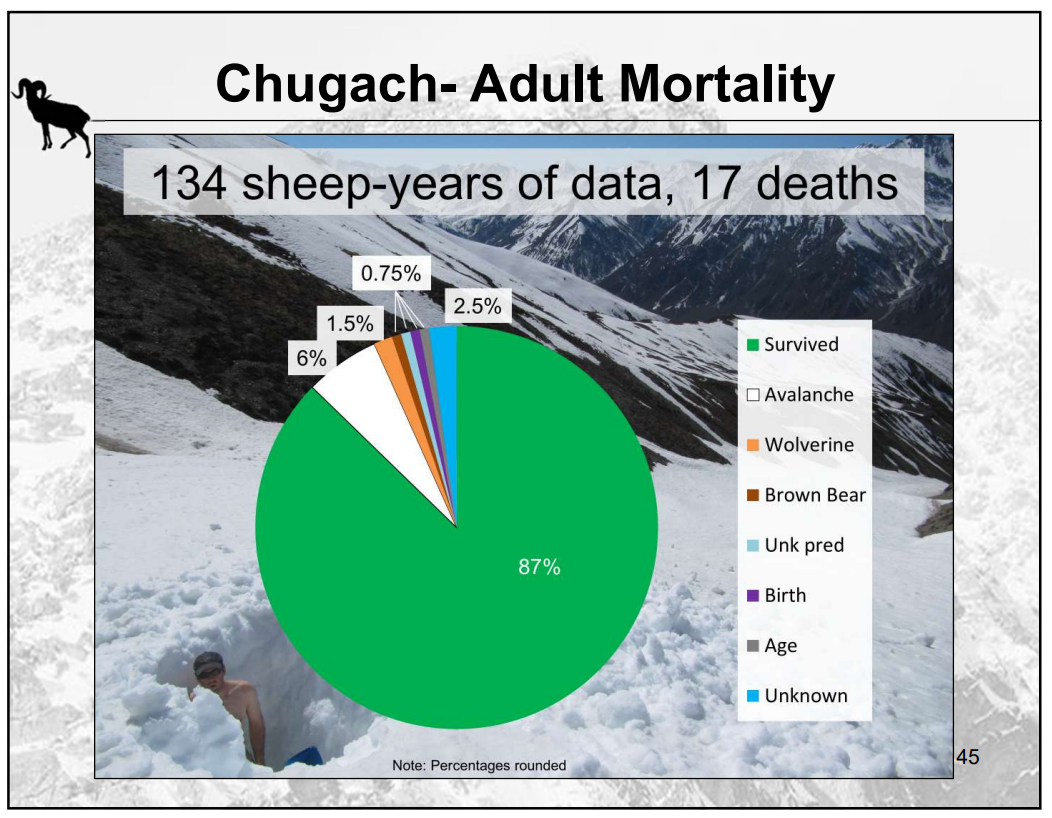
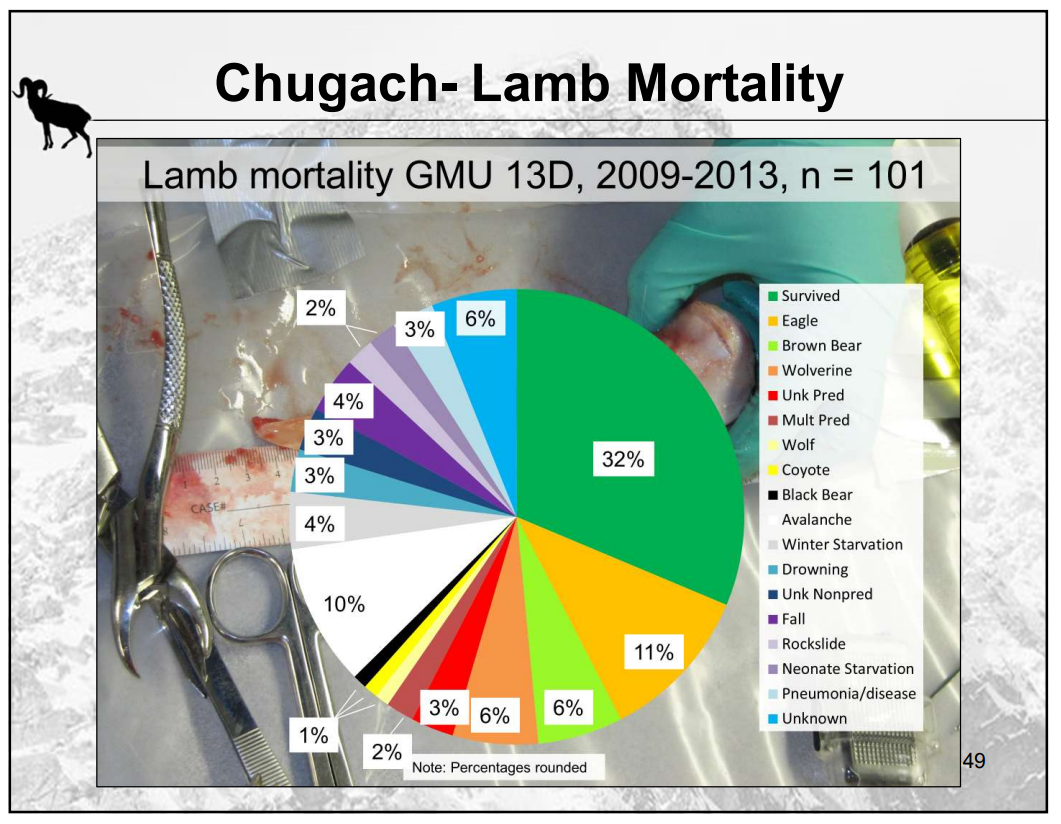
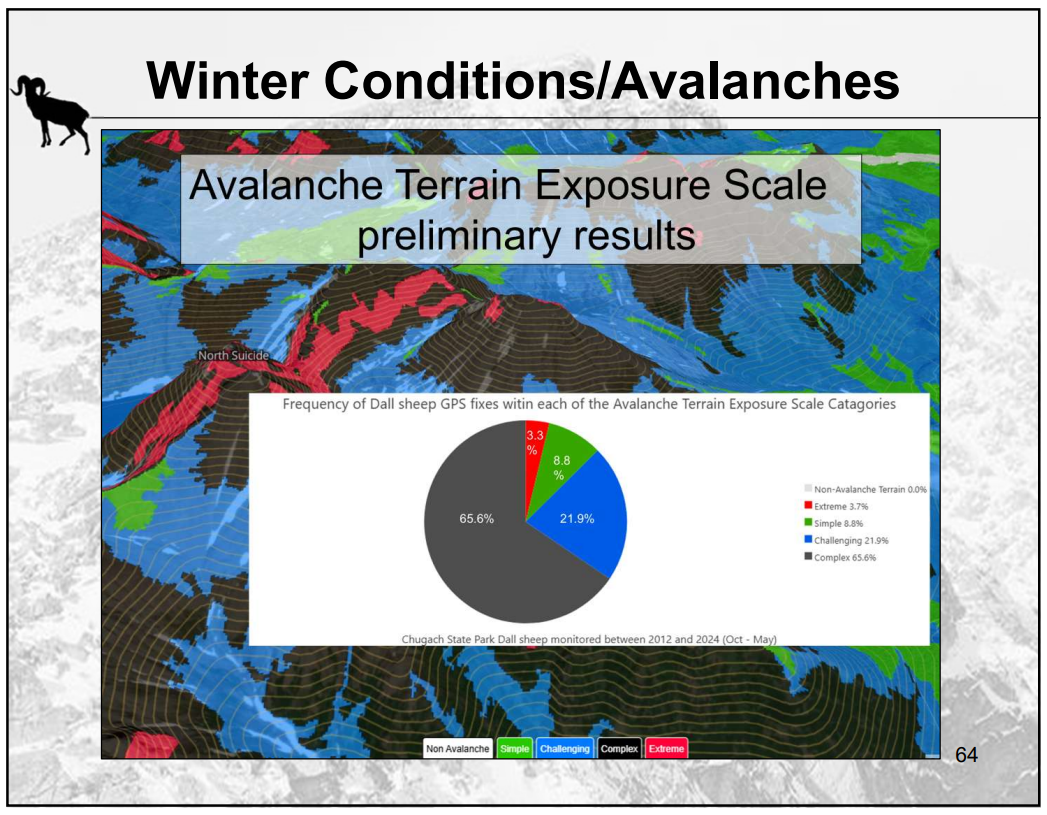
The reports from ADFG highlighted that one of the top causes of mortality for adult sheep and lambs in the Chugach is avalanches, and ongoing research shows that these sheep spend a lot of time in complex avalanche terrain.
They also stressed the role of climate change in declining deer populations, including rain-on-snow events, advancing shrublines, and poor nutrition in hot, dry summers. A variety of predators have been documented killing sheep, but none were identified as a leading cause of sheep declines, and predation was spread across many species, including golden eagles. The report noted that sheep populations are likely to persist at lower densities, and this may be the new paradigm with the warming Arctic.
AWA will continue to track sheep as an IM species through the next statewide meeting and on.
And now the bad news:
Wounded bears will not count against a hunter’s tag regionwide. While Advisory Committees and the public, as well as AWA, were in favor of wounded bears counting against a hunter’s tag, the Board opposed this proposal. The Board also failed to pass a proposal put forth by JBER to count a wounded moose against the bag limit in the JBER management area.
Bears east of Anchorage face longer hunting seasons and increased bag limits. The brown bear season in Unit 14C Remainder, which includes the area from Twentymile River to Hunter Creek, was extended to the end of June. The bag limit for black bears in this area was also increased to three bears.
A proposal to ban artificial light and infrared devices on Kodiak failed, despite local and tribal requests. Statewide use of infrared devices was passed last year for the taking of furbeares like beaver, coyote, fox, lynx, marten, mink, muskrat, and wolf. AWA strongly opposed the proposal, as well as advisory committees in Southeast and Kodiak. Despite widespread support, the Board failed to pass a proposal that would have banned these devices on Kodiak.
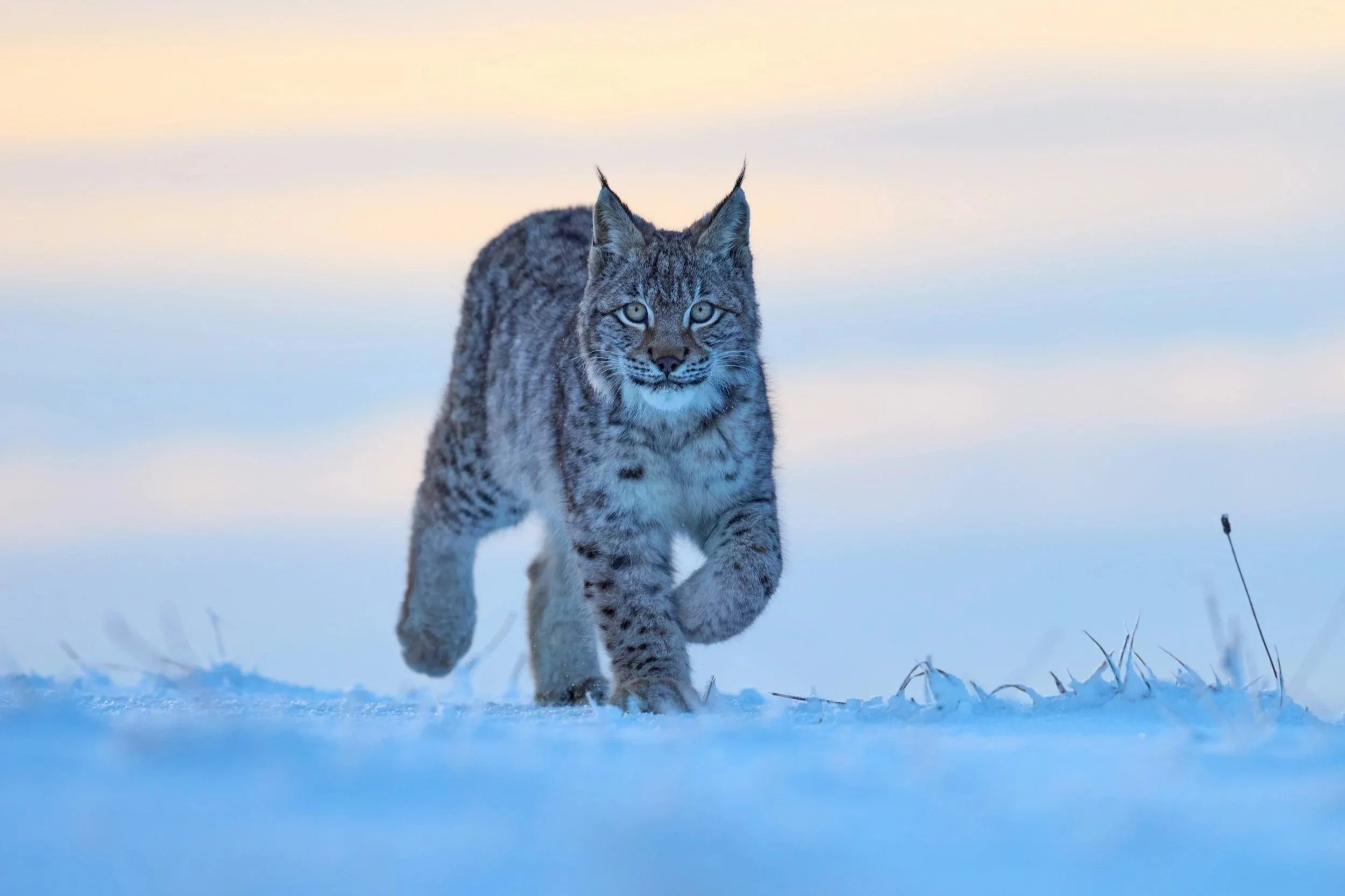
Lastly, lynx on the Kenai Peninsula can now be trapped until the end of February.
Thank you to all of our supporters and members who have helped us advocate for Alaska’s wildlife through the Board of Game process. Stay tuned for updates on which proposals passed and failed following the January meeting!
