

The Orca
By Rayne Billings and Chelsey Cook
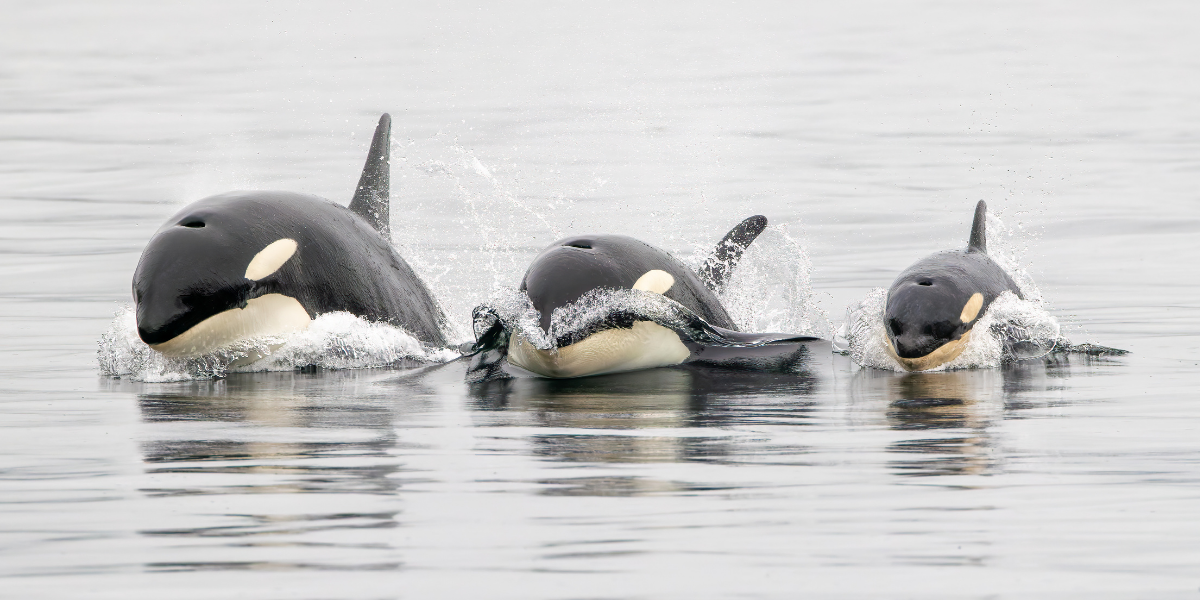
Orcas are best known for their striking black-and-white coloring and tall dorsal fins. They are found throughout Alaska’s marine waters, but are most commonly seen in Southeast Alaska, the Gulf of Alaska, and north into the Chukchi and Beaufort Seas. Orcas can be seen year-round in Alaska, although their movements vary by region and by ecotype.
Orcas are members of the dolphin family and can reach about 30 feet in length. Adult males can weigh more than 13,000 pounds, and their large dorsal fins can reach 6 feet or more in height. Orcas live in stable, tight-knit family groups known as “pods.” They can also be sorted into different ecotypes based on differences in diet, behavior, genetics, communication, and social structure. There are three main ecotypes found in Alaska: Resident, Transient, and Offshore.
DID YOU KNOW…
Orcas are one of the ocean’s top predators and humans are their only known predators.
Some populations of orcas have even been recorded eating great white sharks!
Orcas rely on echolocation to find prey and navigate underwater.
Female orcas have long lifespans, sometimes up to 80 years long.
Females produce a calf every 4-6 years. Their gestation period is 15 to 18 months long.
Killer whales are highly intelligent and are one of the few species who are able to recognize themselves in a mirror.

Photo courtesy of Encyclopedia Britannica
SCIENTIFIC AND COMMON NAMES
Orcinus orca; killer whale; orca whale, kéet (Tlingit), sg̱áan (Haida)
GENERAL DESCRIPTION
Orcas are toothed whales, best known for their black-and-white coloring. They have tall dorsal fins reaching up to 6 feet in height and large, rounded pectoral flippers. Orcas have large, white eyespots and white underbellies. While the exact reasoning for this coloration is unknown, it is speculated that it serves as a form of camouflage; when viewed from above, they appear dark like the water, but when viewed from below, their bodies appear more light in color like the sea’s bright surface, making them harder to detect. The large white areas also break up their body and make them appear smaller to potential prey. They also have a large gray patch behind their dorsal fins. This marking is known as the “saddlepatch”, and it can be used to identify individual whales. It is similar to a human fingerprint; each saddlepatch is unique to that whale. Sometimes, the saddlepatch can even show what population that killer whale is from.
Because orcas are toothed whales, not baleen whales, they do not feed in the same way as humpback whales or other baleen whales. Instead of filter feeding, orcas hunt their prey similar to terrestrial carnivores. They will often hunt in packs, and many will share their prey among their entire pod.
Orcas are powerful, highly intelligent predators with complex behaviors and strong family bonds. Much of what they learn, including hunting techniques and vocalizations, is passed from one generation to the next, creating distinct cultures among different groups.
RANGE And habitat
Map courtesy of NOAA Fisheries
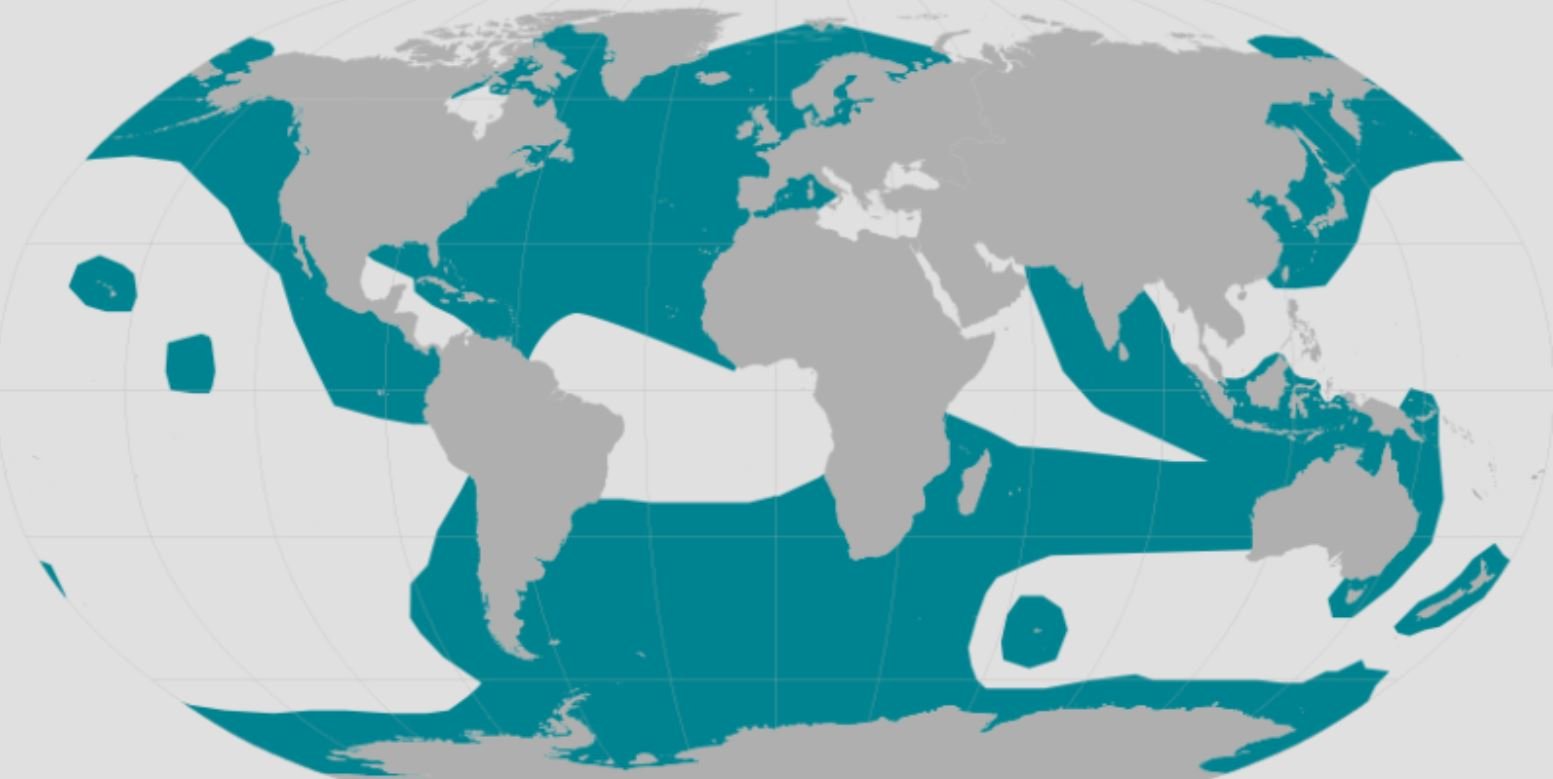
Orcas can be found throughout Alaska’s marine waters, from Southeast Alaska and the Gulf of Alaska to the Aleutian Islands and north into the Chukchi and Beaufort seas. They are most commonly seen along the continental shelf, where deep ocean waters meet shallower coastal habitats. Orcas do not follow one predictable migration route, and their movements vary by region and ecotype. They can be spotted in Alaska waters throughout the year.
Orcas are one of the most widely distributed marine mammals on Earth. They live in every ocean, but are especially common in colder, temperate waters near the poles.
LIFE HISTORY and diet
Orcas live in family groups called pods. These groups are typically centered around a mother and her offspring, and may include multiple generations of family members. Females often play an important leadership role, particularly older females that have extensive knowledge of where and when to find food.
Males generally live shorter lives than females, often reaching their 30s or 40s, while females can live 50 to 80 years or more. Females typically reach sexual maturity in their teens and give birth to a single calf every several years after a 15 to 18-month gestation.
Female orcas eventually stop reproducing, a process known as menopause, which is shared by only a small number of mammal species. Older females continue to play an important role by sharing knowledge about feeding areas. Because orca families are so closely connected, calves often remain with their mothers and other family members for many years. The knowledge passed between generations helps shape unique cultures and traditions among orca pods.
There are three main ecotypes of orcas found in Alaska: Residents, Transients, and Offshores. Offshore orcas are rarely seen because they tend to spend more time farther from shore, while Residents and Transients are commonly spotted in coastal waters. These ecotypes differ in their diets, behavior, social structures, and vocalizations. They generally do not socialize or interbreed with one another. Resident orcas primarily eat fish, especially salmon, while Transient orcas primarily hunt marine mammals such as seals and sea lions. Offshore orcas have a more varied diet that can include fish and sharks. These specialized diets are closely tied to the different cultures and behaviors that have developed within each ecotype.
Orcas have many techniques that they will use to catch their prey. They will often work together and coordinate hunting tactics. They also use echolocation, a form of identifying the location of objects through sound waves, in order to find and hunt their prey. Orcas produce these high-frequency clicks using structures in their nasal passages and a fatty structure in their forehead known as a melon to focus and direct them. When the sound waves bounce off an object, the returning echoes provide information about its location, size, shape, and movement.
THREATS and CONCERNS
Pollution is a major concern for orcas. Persistent contaminants, such as PCBs, can build up in their bodies over time and may affect their immune and reproductive systems. These pollutants can also be passed from mothers to calves.
Underwater noise and vessel traffic can interfere with orcas’ communication, navigation, and ability to find prey. This can be especially concerning in busy coastal areas.
Orcas also face threats from declining prey, fishing gear entanglements, vessel strikes, and oil spills. For fish-eating Resident orcas, healthy salmon populations are particularly important.
Historically, orcas were hunted and sometimes killed because they were viewed as competitors with fisheries. Many were also captured for display in marine parks. Wild capture for public display is no longer legal in the United States, although it continues in some countries.
CULTURAL SIGNIFICANCE
Killer whales are featured prominently in many Northwest Coast indigenous cultures. The Natsilane story depicts the creation of Blackfish, the killer whale, one of the most important creatures in Haida and Tlingit culture. Killer whales are revered and seen as equal to humans in Haida and Tlingit culture.
