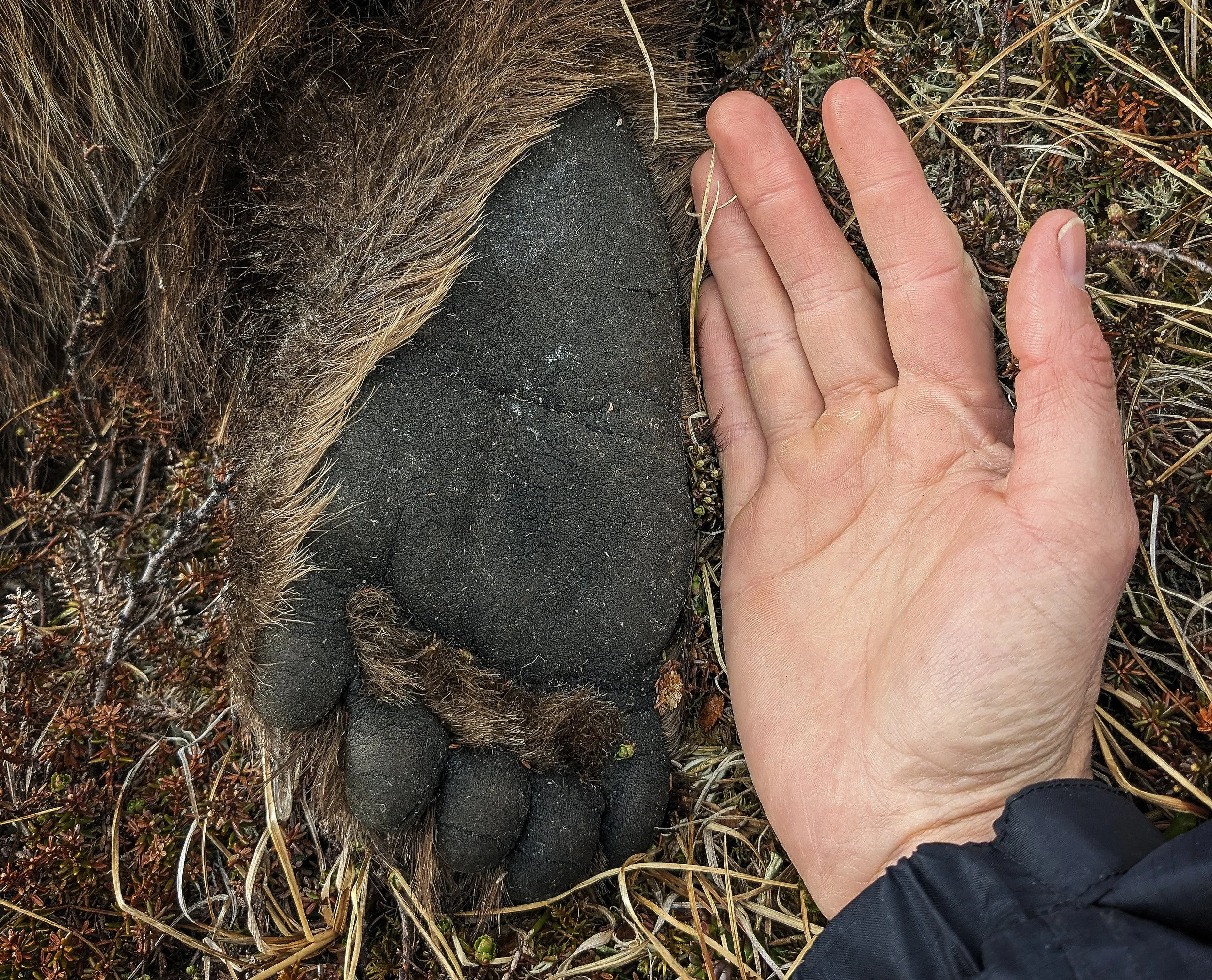
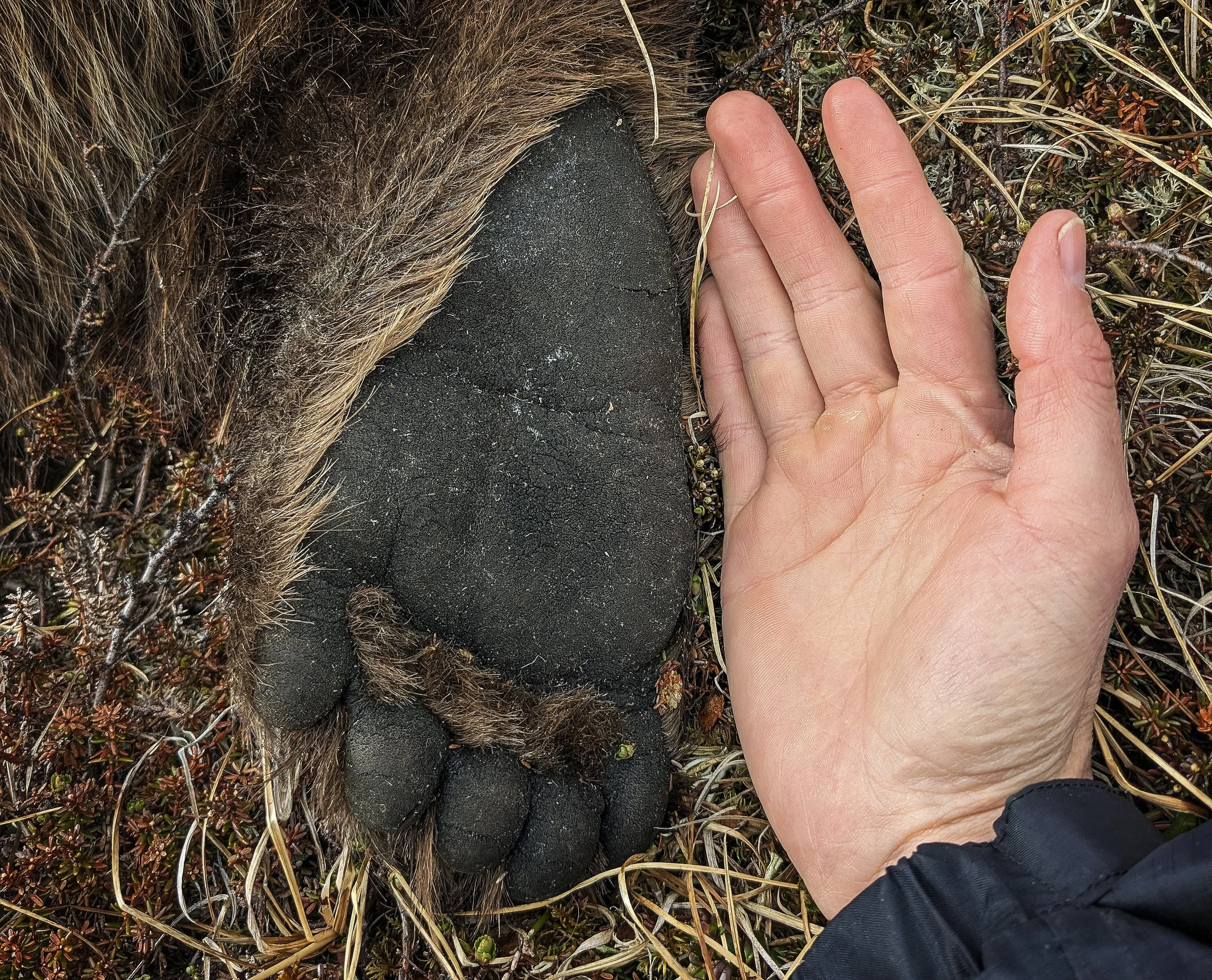
Alaska Wildlife Alliance Executive Director Nicole Schmitt places her hand next to the paw of a bear cub that was killed on state land within the Mulchatna intensive management area in southwest Alaska in May 2026. (Photo by Nicole Schmitt/Alaska Wildlife Alliance. Copyright © 2026, Alaska Wildlife Alliance. All Rights Reserved.)
‘I’ve never seen anything like it’: On the Ground in the Mulchatna Bear Control Area
Documenting Alaska's First Aerial Bear Gunning Program
Note: This blog contains graphic images of dead bears.
Early last month, AWA learned that the Mulchatna Bear Control Program had resumed for its fourth year. Given the immense public interest in this program—and the lack of transparency around its operations—we decided to fly the gunning area to see what the program looked like on the ground.
This flight marked a significant moment in the history of Alaska's predator control programs. To our knowledge, predator control programs in Alaska have only been photographed once before, during a state wolf control effort. This was the first time aspects of a bear control program have been documented.
History of the Program
Since 2022, nearly 200 bears—many of whom were cubs not even a year old—have been gunned down from helicopters and airplanes under Alaska’s Mulchatna Bear Control Program in southwest Alaska. Alaska Wildlife Alliance has fought this unethical program from the outset, winning a historic lawsuit in 2025 that found the program to be illegal. Shortly after, the Alaska Board of Game reinstated the program and once again gave the Alaska Department of Fish and Game (ADF&G) permission to aerially gun every bear, black or brown, of any age over a 40,000 square mile area. This Intensive Management area is extremely close to world-famous bear sanctuaries; it is just 30 miles from Katmai National Park, home of Fat Bear Week, and only 50 miles from McNeil River State Game Sanctuary, home of the world’s largest concentration of brown bears.
Each year, ADF&G internally chooses a ‘control area’ within that 40,000 square miles to gun bears and wolves. In 2025, the control area for wolves was 3,700 square miles (about 1.5 times the size of the state of Delaware). The State establishes a gunning plan that usually includes one helicopter and one or two scout planes. The gunning area and the timeline for when the gunning will occur are not shared with the public until after they’ve stopped shooting for the year, via an annual report to the Board of Game.
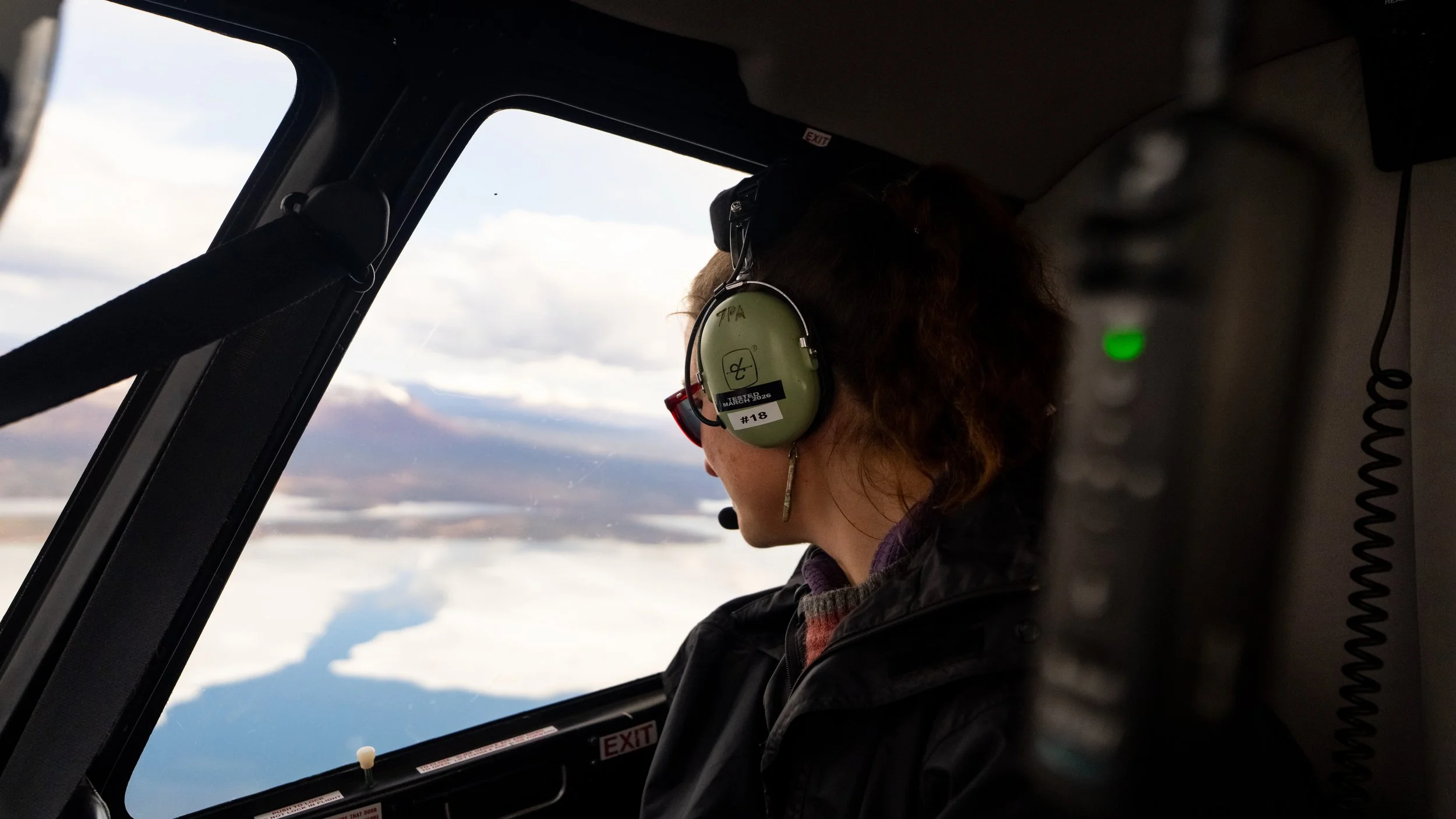
Alaska Wildlife Alliance Executive Director Nicole Schmitt looks out a helicopter window to the landscape below while en route to the Mulchatna intensive management area in southwest Alaska in May 2026. (Photo by David Rossow/Alaska Wildlife Alliance. Copyright © 2026, Alaska Wildlife Alliance. All Rights Reserved.)
Why We Went
Our goal was to observe the gunning area and document what we found. While the 2026 gunning area had not yet been released, we assumed it would be similar to the 2025 gunning in the northwest section of the Intensive Management area, containing Wood Tikchik State Park and bordering Togiak National Wildlife Refuge.
We ensured our presence did not harass any wildlife, as that would be counter to AWA’s mission. While documenting, we flew high enough that any wildlife on the ground didn’t change their behavior. We saw many birds, caribou (including calves) and one moose browsing. Before landing, we ensured that we were permitted to land and circled high above to make sure our landing wouldn’t impact any wildlife.
What We Found
From Dillingham, we flew northwest towards a notch of state land between Togiak National Wildlife Refuge and Wood Tikchik State Park. The State has aerially gunned this area for the past three years, seeming to concentrate on the state-side of the border with Togiak Wildlife Refuge.
The State reported in the prior three years of gunning that almost all the bear hides and skulls are salvaged, and that it generally takes 30 minutes to skin the bears. This timeline has raised questions from both AWA members who are bear hunters and professional bear guides. During our flight, we looked for bear carcasses while flying over the gunning area. Flying high above brushy tundra, it was difficult to differentiate colors on the ground, but we didn’t see any gut or meat piles. As we started to head back south, we continued surveying state lands near the border of the federally managed Togiak National Wildlife Refuge. While flying the refuge boundary, we saw an unusual shape and, during a second pass, identified two dead bears lying in the tundra.
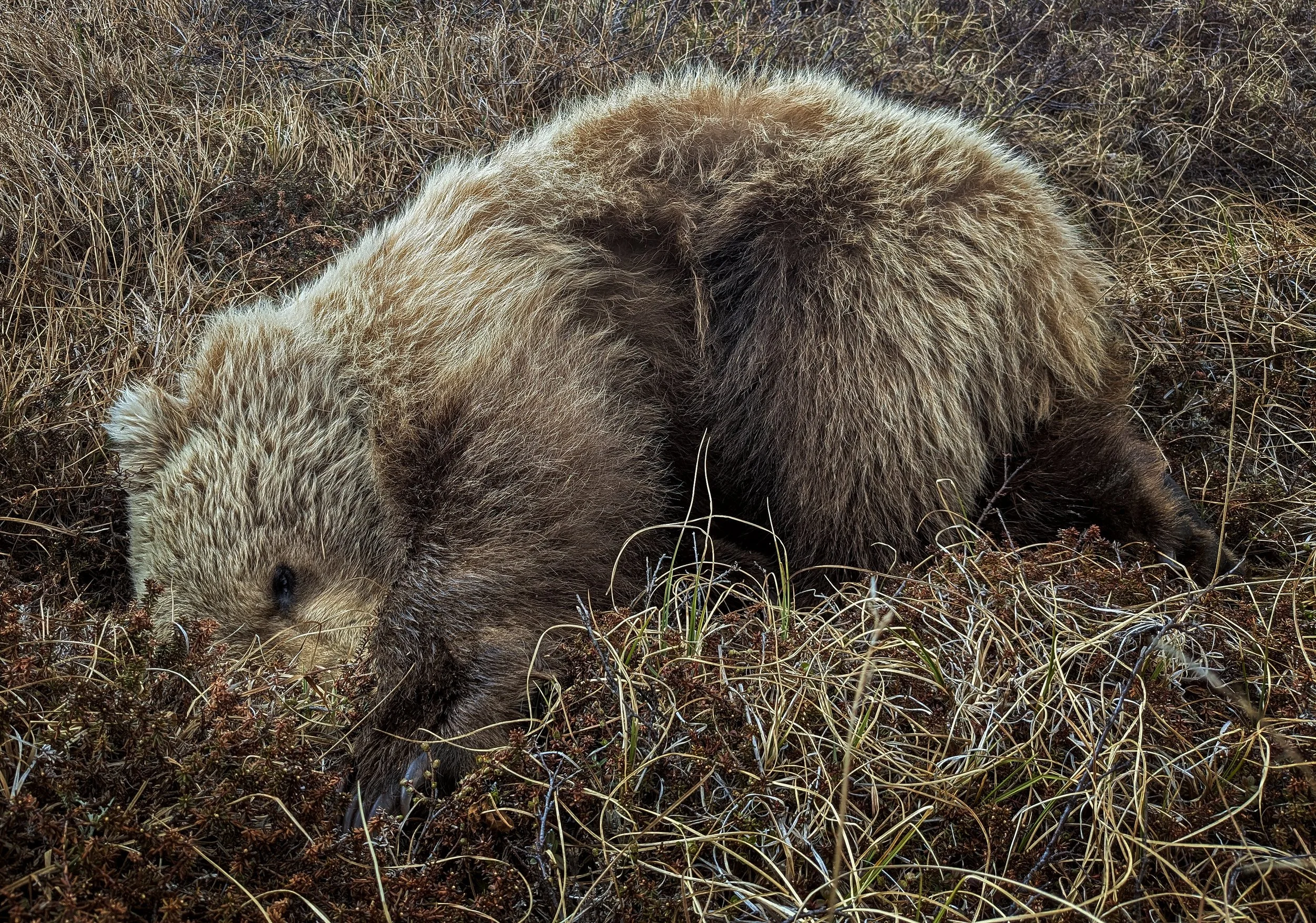
A deceased bear cub is left intact on the tundra on state land within the Mulchatna intensive management area in southwest Alaska in May 2026. (Photo by Nicole Schmitt/Alaska Wildlife Alliance. Copyright © 2026, Alaska Wildlife Alliance. All Rights Reserved.)
We landed at the first dead bear, who we quickly realized was a cub. The carcass was fully intact, with no evidence of salvage. The cub was lying on its side, eyes open, one paw outstretched; it looked as if it had been running and collapsed to its side between small tussocks.
A spent "Special Forces" short magnum slug casing was located a few feet from the bear's head and the dead cub showed little evidence of decomposition. We presume it was killed earlier that day. Had the cub been just a few hundred feet farther west, it would have been on Togiak National Wildlife Refuge and protected from the bear control program.
We flew a short distance to the second carcass and discovered an adult brown bear. Unlike the cub, the bear had been rolled onto its back, the carcass partially gutted with its head and front paws removed. Again, spent "Special Forces" short magnum slug casings were found nearby.
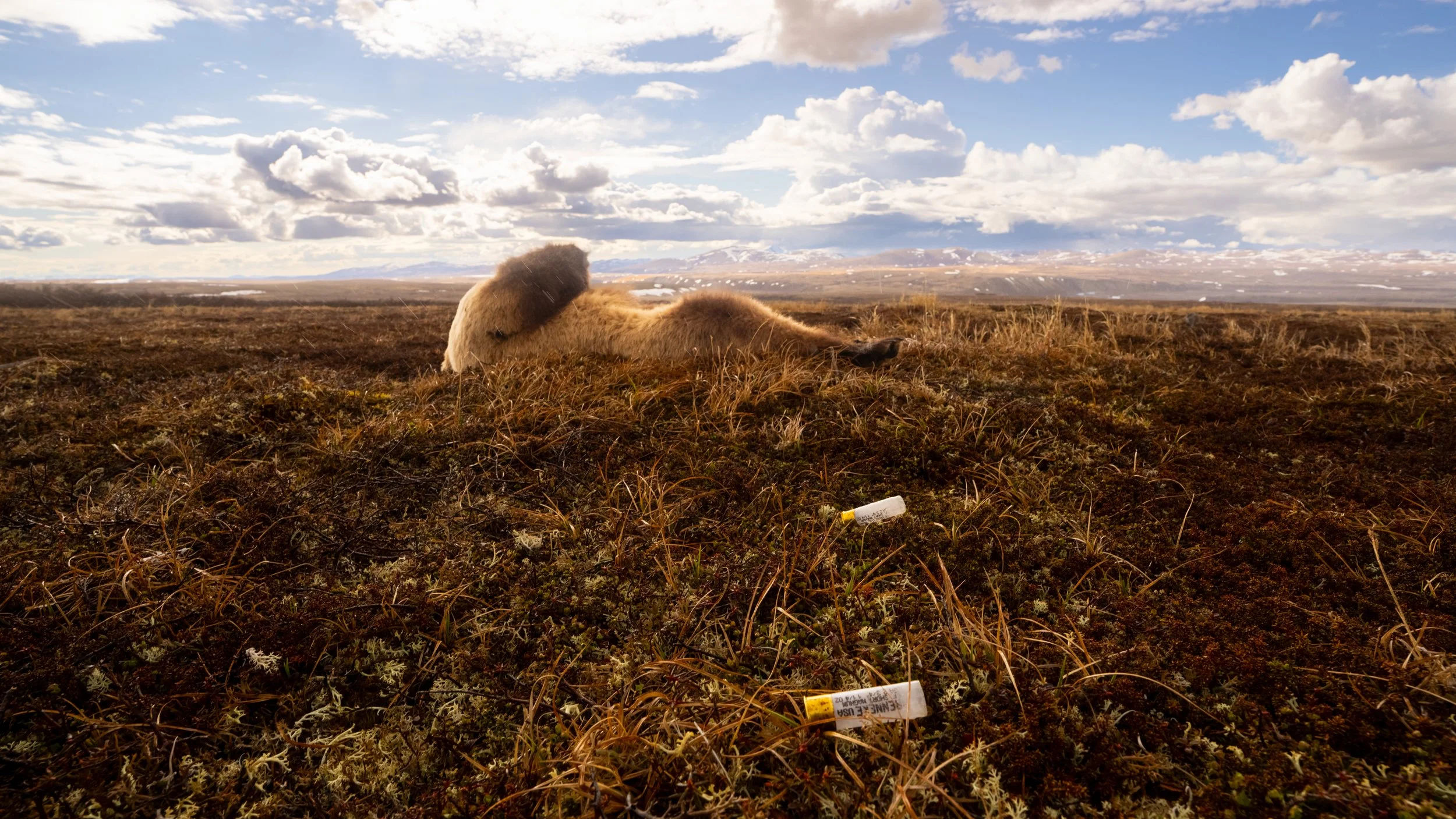
Shotgun slug cartridges are visible on the tundra near a deceased adult bear on state land within the Mulchatna intensive management area in southwest Alaska in May 2026. (Photo by David Rossow/Alaska Wildlife Alliance. Copyright © 2026, Alaska Wildlife Alliance. All Rights Reserved.)
““It’s one thing to read about this program on paper, in meetings or courtrooms where the language around it is very sanitized - it’s another to see it first hand. The state has reported killing dozens of cubs over the past few years, but seeing that cub on the tundra just hundreds of feet from the wildlife refuge border, so exposed, its paw the size of my hand…it was really hard to see that and not feel immense shame. The trash near the bodies, the noise of aircraft buzzing around, the casings next to unsalvaged bodies - I grew up hunting, I still hunt, and I have never seen anything like this. I love this state more than anything, but that day I was not proud to be an Alaskan.”
”
What We Learned
While in the gunning area, we did not see bears that had been skinned for salvage. The cub appeared to be intact, and we are unsure if any biological samples were collected from it. The head and front paws were removed from the nearby adult and it was partially gutted; it was not skinned for salvage. The condition of the bear stood in stark contrast to statements made by ADFG Commissioner Doug Vincent-Lang on the podcast Native America Calling just two days after our flight. When asked what happens to the bears that are killed, the Commissioner replied, “[The meat is] donated to local villages. No animals are wasted. We can’t do that ethically as part of the department.”
It was difficult to reconcile those assurances with the condition of the carcass we found.
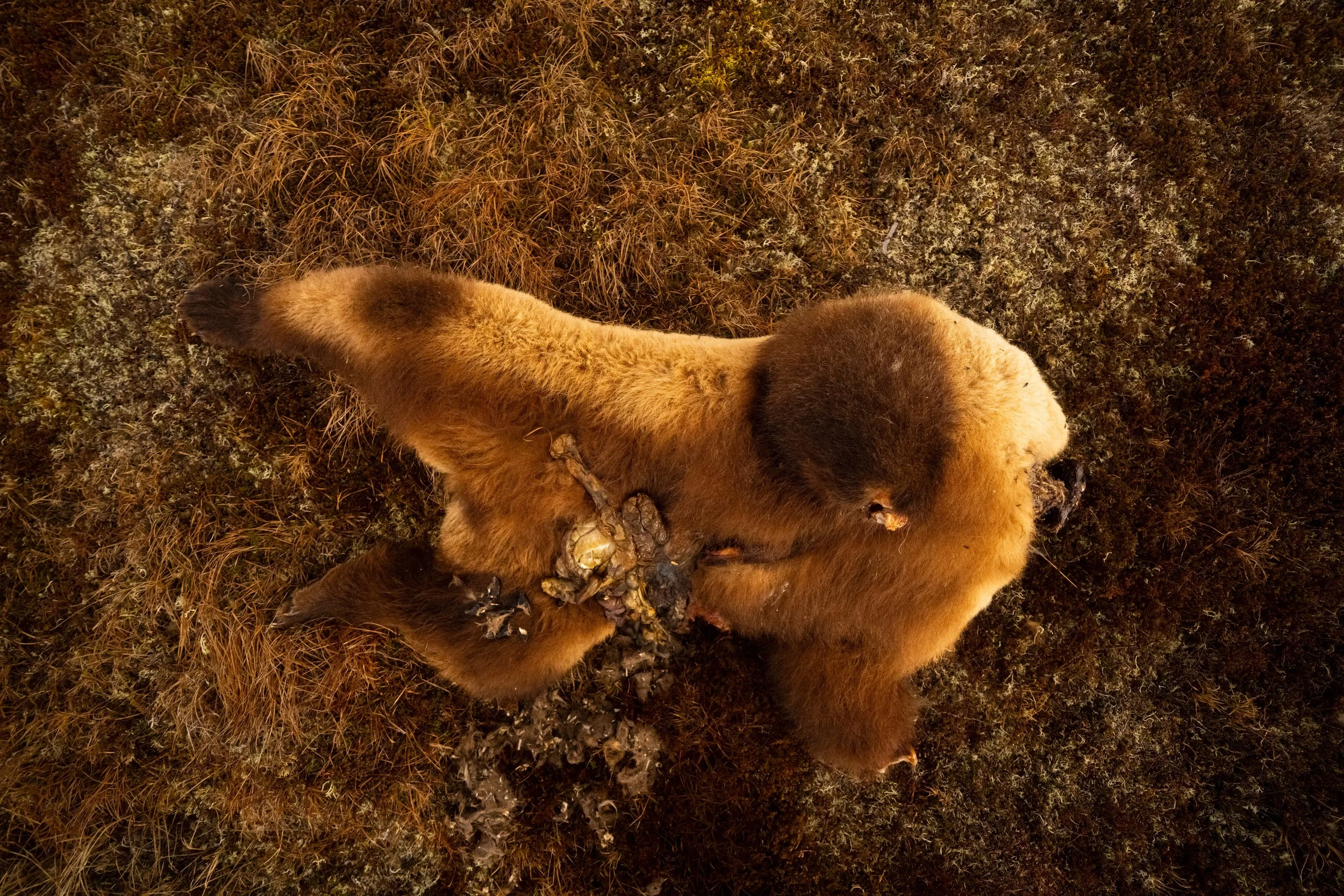
An adult bear carcass, missing its head and front two paws, is left on state land within the Mulchatna intensive management area in May 2026. This bear was killed as part of the State of Alaska’s Mulchatna Bear Control Program. Since 2023, state employees and contractors have gunned down nearly 200 bears, including cubs, from helicopters and spotting planes. The project is expected to continue every Spring until 2028. (Photo by David Rossow/Alaska Wildlife Alliance. Copyright © 2026, Alaska Wildlife Alliance. All Rights Reserved.)
Next to the body, we also found two cartridges and a plastic sheath that resembled a disposable blade cover. Leaving plastic so blatantly in a supposed critical area for caribou calving felt careless—it was jarring to find litter beside bears killed in the name of wildlife management.
Once on the ground, the reality of aerial bear hunting became especially apparent. In the open tundra landscape, bears have little cover and few opportunities to evade pursuing aircraft. The aerial advantage held by gunners is overwhelming. Seeing the terrain firsthand underscored how vulnerable bears are during these operations and raised serious ethical questions about the methods being used.
The bears were also found a few hundred feet from the Togiak National Wildlife Refuge, where it is illegal to gun them down. It is a disturbing realization that earlier that day, they may have been just on the other side of the boundary line, perhaps feeding on sedge in a protected area free from the range of the ADF&G helicopters. The map to the right marks the approximate location of the two bears. The light green denotes state land, while the dark green is Togiak National Wildlife Refuge.
We have questions about the State helicopters’ impacts on caribou. While we flew high to avoid disturbing caribou and other wildlife, we observed the State’s helicopter flying below, presumably looking for or travelling to a bear spotted by scouting planes. We saw hundreds of caribou in the area and seek information from ADF&G on how aerial operations are impacting caribou and how the state is documenting those impacts.
We have concerns for the impacts this program will have on bears. Per the State’s Intensive Management protocol, ADF&G completes a standard report to the Board of Game each year on active programs, with questions outlining the research and impact of programs on prey and predator species.
How You Can Help
We will continue to advocate for ethical, science-based game management for Mulchatna bears and caribou, and our most recent lawsuit is currently moving through the courts. We will update the public as soon as we know more.
While we wait, there are several things you can do to help advocate for Mulchatna bears:
Sign our petition. Every signature sends a clear message that Alaskans and people around the world support science-based wildlife management, transparency, and responsible decision-making.
Donate to our Wildlife Defense Fund. We are a grassroots organization built by the support of our members. Flying to the control area to document the bear killing and filing lawsuits both require a lot of our resources. Your donations help us to continue this work. Any amount helps.
For Alaskans:
Contact your representatives to voice your concerns. The State Legislature confirms Board of Game members and approves of ADF&G budgets. Contact information is found on each member's page under Senate and House.
Contact the Board of Game and the Alaska Department of Fish and Game (ADFG) to voice your concerns. The Board of Game is the policy-making entity that voted to approve the bear control program, and also has the power to stop the program. ADFG is the state organization that carries out the bear gunning. You can find their contact information here:
Lastly, make sure you sign up for our e-newsletter and follow us on social media to stay updated on the Mulchatna Bear Control Program and to receive our Action Alerts.
Thank you for all of your support, which allows us to do this important work. Thanks to the many Alaskans who made this effort possible.
