

The Alexander Archipelago Wolf
The island wolf that needs salmon and old-growth forests to thrive.
The Alexander Archipelago wolf is a rare subspecies of gray wolf found in the coastal rainforests of Southeast Alaska and parts of western Canada. Their isolated habitat has made them genetically distinct from inland gray wolves, and they rely heavily on Sitka black-tailed deer and seasonal salmon runs for food. Today, habitat loss and declining prey populations threaten this unique coastal predator.
DID YOU KNOW:
Unlike many inland wolves, AA wolves are excellent swimmers. They paddle between islands in the Alexander Archipelago, navigating ocean channels to hunt and travel.
Scientists still debate where they originally came from. One theory says their ancestors moved north along the Pacific Coast after the Ice Age; another suggests they descended from wolves crossing the ancient Bering Land Bridge from Siberia
Their habitat is naturally fragmented because they live across more than a thousand islands. That isolation has made them genetically distinct from inland gray wolves
Salmon are a major part of their diet. During salmon runs, they catch fish straight from streams, making them one of the few wolf populations heavily tied to marine food sources.
Scientific and Common Names
Canis lupus ligoni. Also known as island wolves, or coastal wolves.
General Description
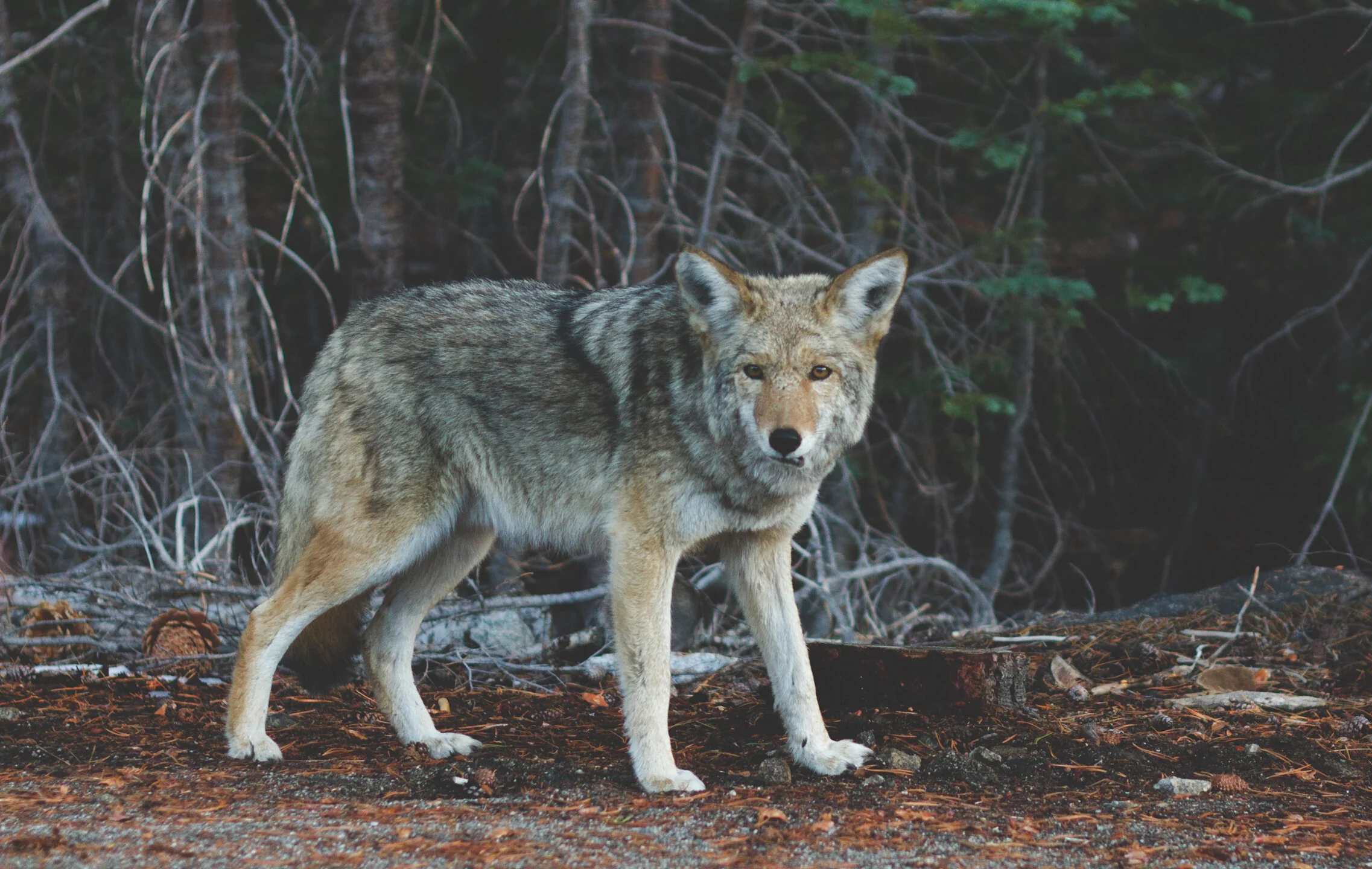
The Alexander Archipelago wolf (Canis lupus ligoni) is a subspecies of gray wolf that lives in the coastal rainforests and islands of Southeast Alaska and parts of western Canada. These wolves are specially adapted to life in a wet, rugged coastal environment filled with dense forests, mountains, streams, and ocean shorelines. They are generally smaller than many inland gray wolves and often have dark-colored fur ranging from black to brown or gray. AA wolves are known for being strong swimmers, traveling between islands in search of food and territory.
Range and Habitat
The AA wolf lives in the coastal temperate rainforest region of southeast Alaska from Yakutat Bay to Dixon Entrance, except for Admiralty, Baranof, and Chichagof Islands, and parts of coastal British Columbia. More than 80 percent of their habitat occurs on the Tongass National Forest.
AA wolf habitat includes dense old-growth forests, islands, mountains, wetlands, and coastal shorelines within the Alexander Archipelago. These wolves are closely connected to forest ecosystems because their main prey, the Sitka black-tailed deer, depends on old-growth forests for food and winter shelter. The region receives high amounts of rainfall each year, creating a cool and wet environment with thick vegetation and many salmon streams. Unlike many inland wolf populations, Alexander Archipelago wolves often travel across islands and are capable swimmers, crossing rivers and ocean channels to reach different parts of their territory. They also use coastal areas and streams to hunt salmon and other food sources.
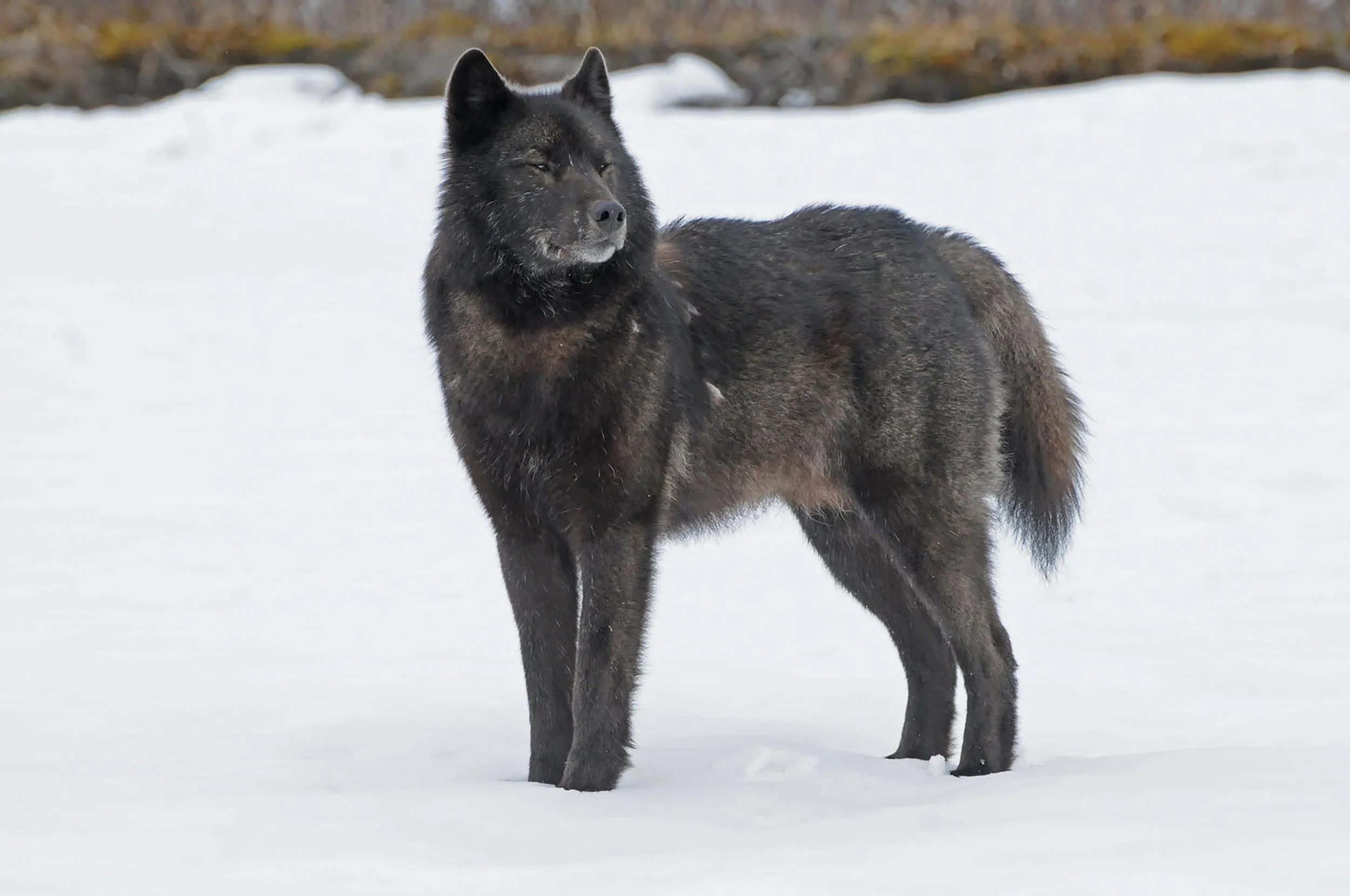
Photo credit: Bob Armstrong, USFWS.
Life History and Diet
The AA wolf lives and hunts in packs that usually consist of a breeding pair and their offspring. Like other gray wolves, they are social animals that communicate through howling, scent marking, and body language. Breeding typically occurs in late winter, and pups are born in the spring after a gestation period of about two months. Pups are raised in dens located in sheltered areas such as hollow logs, root systems, or small caves. Both parents and other pack members help care for and feed the young until they are old enough to travel and hunt with the pack.
Their diet mainly consists of Sitka black-tailed deer, which is their primary prey throughout most of the year. They also eat salmon during spawning seasons, along with beavers, small mammals, birds, and occasionally marine animals or carrion. Because they live in coastal environments, salmon can become an important seasonal food source when deer are less available.
Threats and Concerns
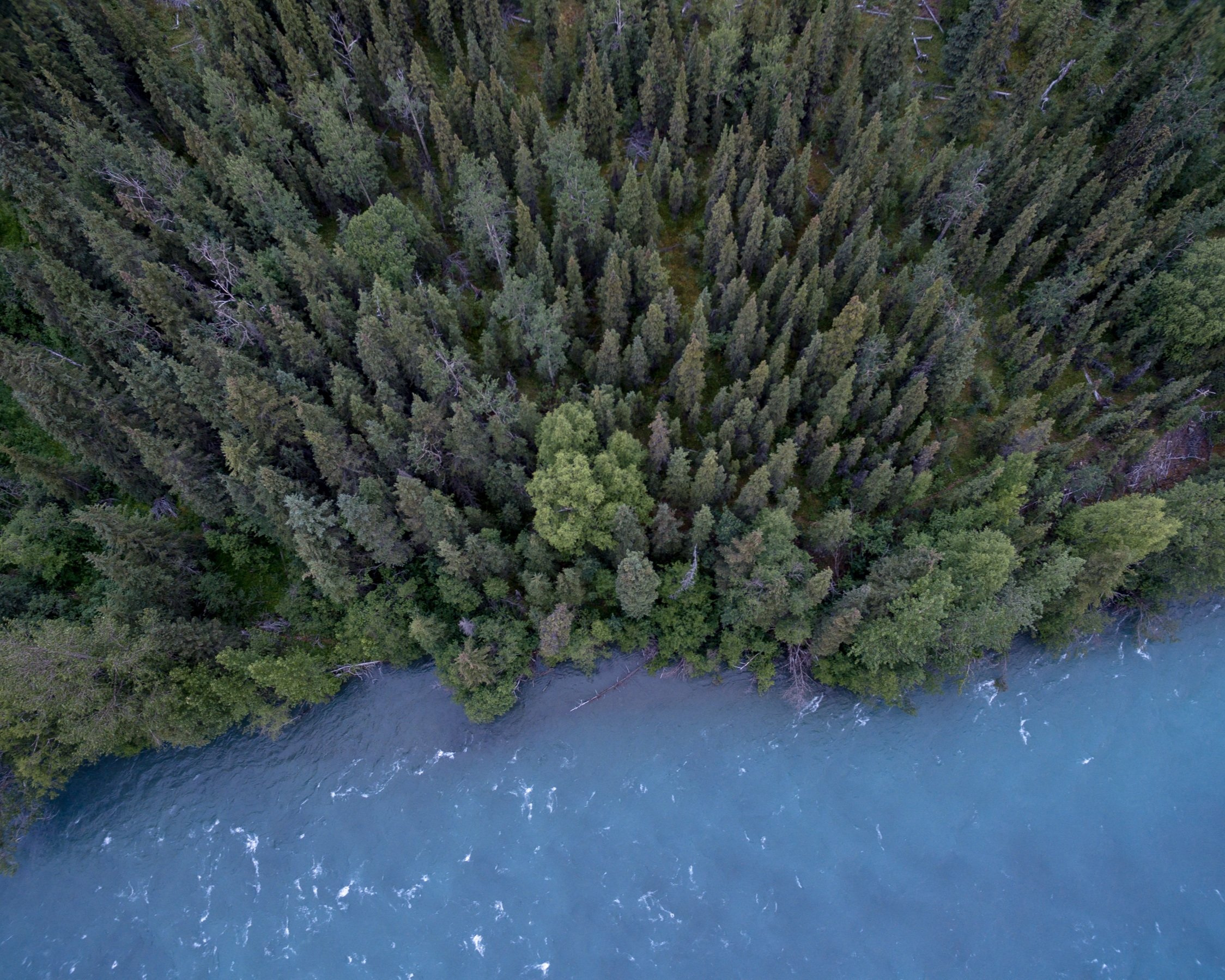
Logging poses a severe threat to the ecosystem. Photo Credit: John Hyde.
As a top predator, the Alexander Archipelago wolf plays an important role in maintaining balance within Southeast Alaska’s ecosystems and serves as an indicator of the overall health of the region’s wildlands. However, AA wolves face several threats related to habitat loss, human activity, and population isolation. Because southeast Alaska is made up of many islands and fragmented landscapes, these wolves are more sensitive to environmental disturbance than many other wolf populations in Alaska. One of the biggest concerns is the loss and fragmentation of old-growth forests, especially in the southern part of the archipelago, where deer populations depend heavily on mature forest habitat.
Since Sitka black-tailed deer are the wolves’ primary food source, declines in deer populations can directly affect wolf survival. Logging has already had a major impact on the region, with about 296,000 acres logged on Prince of Wales Island and nearby islands. As young clear-cut forests mature and become less suitable for deer, deer numbers are expected to decline further.
At the same time, expanding road systems increase human access to remote areas, leading to higher levels of legal and illegal hunting and trapping of wolves. The entire southeast Alaska wolf population is believed to number fewer than 1,000 animals and because wolves are divided among island and mainland populations, some groups may be especially vulnerable to decline. Because they are genetically isolated, AA wolves are also very susceptible to inbreeding.
Conservation efforts focus on protecting large areas of high-quality old-growth forest habitat, limiting road access in sensitive areas, and restoring damaged forest ecosystems.
Our Work to Protect Alexander Archipelago Wolves




Alexander Archipelago Wolf Resources
AWA Publication Alexander Archipelago Wolves. The information found on this web page, plus links to additional resources.
Alexander Archipelago Wolf: A Conservation Assessment Person et al 1996.
A must-read for background information on the AA Wolf situation: Statement of David K. Person Regarding the Big Thorne Project, Prince of Wales Island, 2013.
Going Coastal: Shared Evolutionary History between Coastal British Columbia and Southeast Alaska Wolves, Weckworth et al 2010 PDF format. (325KB)
